
Einkäufer von Küchenartikeln können Honiggläser als Geschenkartikel, Tischdekoration und Frühstücksartikel positionieren, wenn das Produkt sauber aussieht, sich gut ausgießen lässt, den Löffel schützt und in einer verkaufsfertigen Verpackung geliefert wird. SinoGlas Die Bestellung von Honiggläsern sollte nicht wie die Bestellung einfacher Vorratsgläser behandelt werden. Der Käufer muss Aspekte wie die Präsentation im Regal, den Schutz im Karton, die Deckelpassform, das Serviererlebnis und die Eignung des Produkts für ein Küchengeschenkset, ein Hotel-Frühstücksbuffet oder ein Sortiment an Gewürzgläsern für den Tisch berücksichtigen. Dieser Leitfaden erklärt, wie Sie ein Sortiment an Honiggläsern aus Glas detailliert planen, um mit Lieferanten zu verhandeln und größere Mengen zu bestellen.
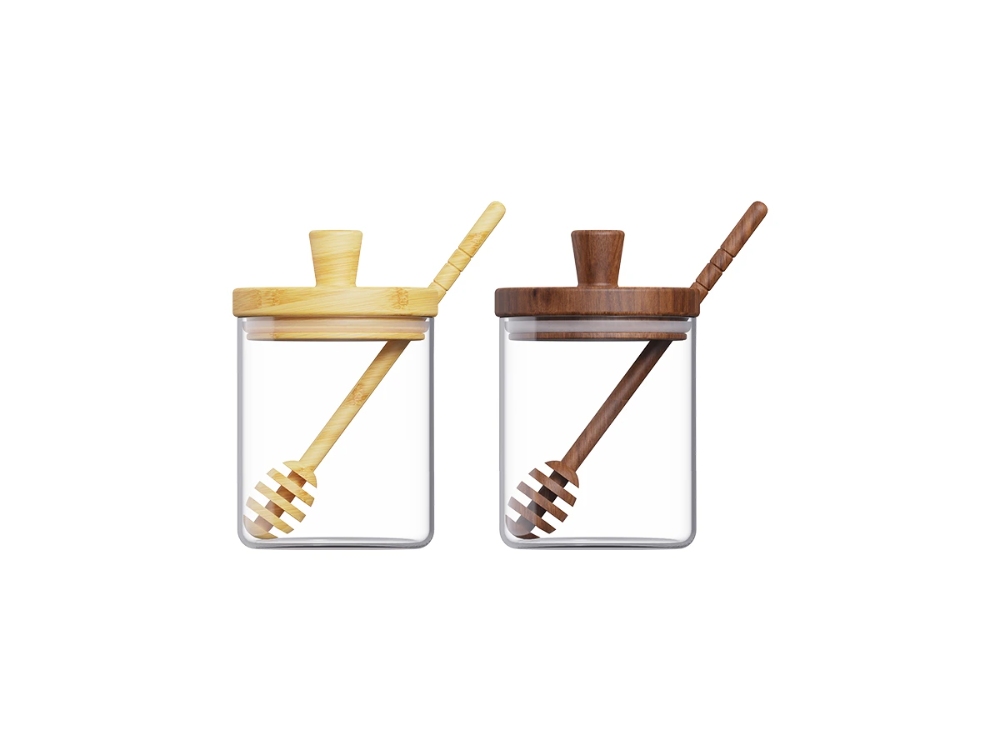
SinoGlass Honigglas Die Produkte kombinieren Klarglas mit Servierdetails aus Holz und eignen sich daher gut als Referenz für Käufer, die verschiedene Honigbehälter vergleichen. Dasselbe Gestaltungsprinzip lässt sich auch auf kleine Gewürzgläser, Frühstückstabletts und hochwertige Tischaccessoires anwenden.
Was unterscheidet Honiggläser von gewöhnlichen Vorratsgläsern?
Ein Tischgewürzglas muss mehr können, als nur den Inhalt aufzubewahren. Es muss auf dem Frühstückstisch gut aussehen, das Servierwerkzeug griffbereit halten und verhindern, dass Honig klebrig wird und sich schwer servieren lässt. Käufer sollten daher Glaskörper, Deckelkonstruktion, Position des Dosierers und Reinigungshinweise gemeinsam prüfen und nicht als separate Details betrachten.
Sichtbarkeit auf dem Tisch schafft Kaufwert
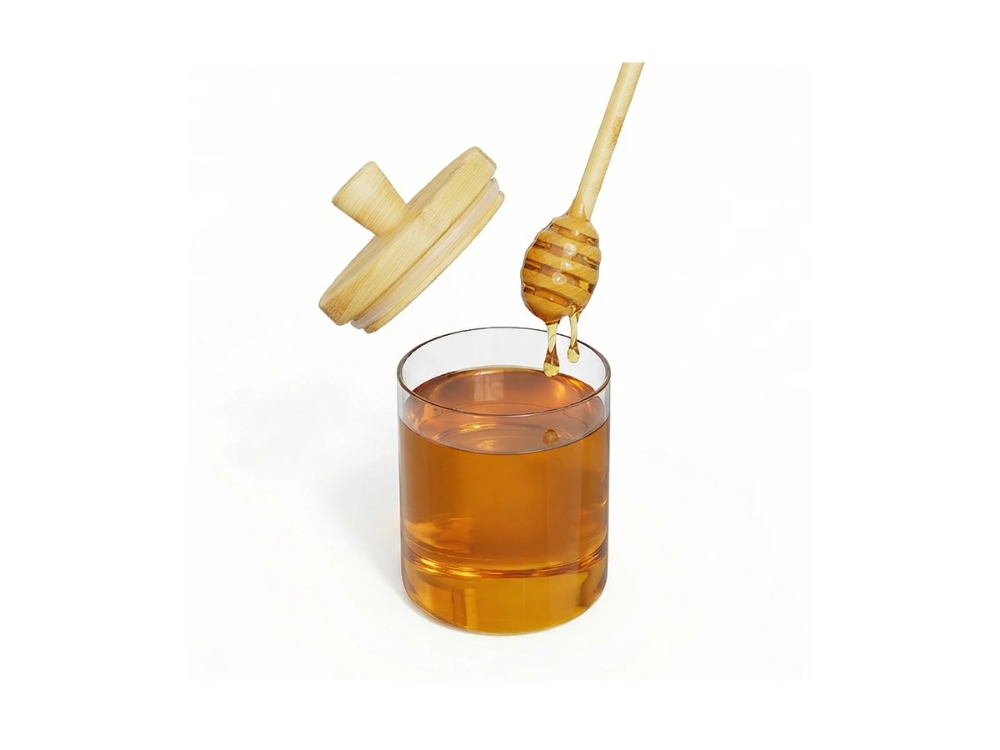
Klares Glas ist wichtig, denn die Honigfarbe ist Teil der Verkaufsbotschaft. Ein Honigglas aus Glas lässt Kunden innerhalb weniger Sekunden Tee, Toast, Frühstücksplatten und kleine Geschenkkörbe vor Augen haben. Für B2B-Einkäufer ist entscheidend, ob das Glas klar genug ist, die Form deutlich erkennbar ist und der Deckel oder Löffel auf Produktfotos stabil wirkt. Hierin unterscheidet sich ein Honigglas von einem Lebensmittelbehälter für den Lagerbereich: Das Glas selbst wird Teil der Präsentation.
Das Design des Schöpflöffels beeinflusst Verschmutzung und Wiederverwendung
Beim Honigausschenken kommt es oft auf die richtige Handhabung an. Der Honiglöffel sollte sich natürlich auf dem Deckel abstützen, den Boden des Glases erreichen und sich leicht herausnehmen lassen, ohne zu viel Glas zu berühren. Käufer sollten die Probe mit echtem Honig testen, nicht nur mit Wasser, da die Viskosität die Bewegung des Löffels beeinflusst. Auch der Deckel sollte nach der Reinigung überprüft werden, da Holzdetails, Dichtungen und Glasränder nach mehrmaligem Anfassen noch einwandfrei schließen müssen.
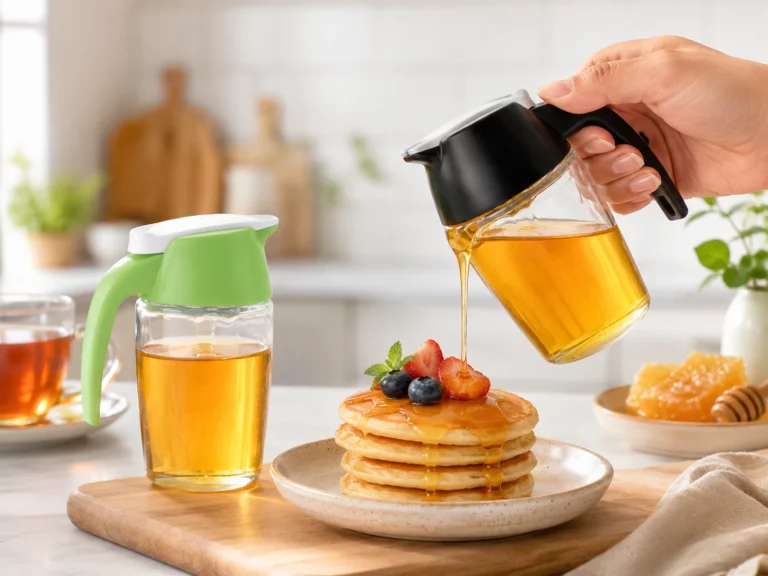
SinoGlass hat auch ein Glasgefäß für Öl und Honig Mit einem kompakten Griff und einem praktischen Schiebeverschluss. Diese Seite kann als zusätzliche Informationsquelle dienen, wenn Käufer Honiglöffel mit Ausgießmechanismus mit Honiggläsern mit Schöpfkelle vergleichen.
Wie können Einkäufer ihr Geschenk- und Einzelhandelssortiment planen?
Ein Küchengeschenkset wirkt am besten, wenn jedes Teil eine klare Funktion hat. Ein Honigglas passt zwar gut zu Tee, Frühstücksbrettern, Glasbechern, kleinen Gläsern oder saisonalen Lebensmitteln, sollte aber nicht wie ein willkürliches Beiwerk wirken. Einkäufer im Einzelhandel müssen entscheiden, ob das Honigglas das Hauptprodukt, ein Accessoire in einem Set oder ein Tischgewürzglas für die Gastronomie sein soll.
Das Design des Honigglases unterstützt hochwertige Regalgeschichten
Ein Honigglas aus Glas wirkt besonders ansprechend, wenn es honigfarben ist, warme Holzdetails aufweist und nicht zu künstlich aussieht. Im Einzelhandel ist dies wichtig, da der Käufer nicht nur ein Gefäß, sondern ein ganzes Frühstücksritual verkauft. Warme Deckelfarben passen gut zu Naturkostläden, während dunklere Oberflächen eher zu formelleren Tischgewürzgläsern passen. Wünscht der Käufer verschiedene Ausführungen, sollte der Lieferant prüfen, ob die Bestellmenge dies zulässt.
Frühzeitige Kostenkontrolle für Geschenkverpackungen erforderlich
Geschenkverpackungen können den Verkaufspreis erhöhen, aber auch zu Abfall führen, wenn die Verpackung instabil oder für den Vertriebskanal zu teuer ist. Käufer sollten klären, ob der Honiglöffel einzeln, mit Löffel, in einem Kraftkarton oder als Teil eines Küchengeschenksets versendet wird. Schaumstoffeinlagen, Papierschalen oder Formfasereinlagen können sowohl den Produktschutz als auch die Stückkosten beeinflussen. Diese Details sollten geprüft werden, bevor die Verpackung freigegeben wird.
Mit SinoGlass OEM- und ODM-Kundenservice für Küchengeräte,Käufer können die Logoplatzierung, die Deckelausführung, den Verpackungsstil und die Musterbestätigung besprechen. Es empfiehlt sich, Referenzfotos, die angestrebte Preisspanne und Hinweise zum Vertriebskanal vor der Anfrage nach einem endgültigen Angebot zu senden.
Was sollte vor Großbestellungen geklärt werden?
Honiggläser in Großpackungen benötigen mehr als nur eine ansprechende Verpackung. Einzelhändler sollten die Produktionsversion, den Exportkarton und den genauen Wortlaut der Produktbeschreibung (online oder auf der Verpackung) prüfen. Dies ist besonders wichtig, wenn der Artikel als Geschenk verkauft wird, da Kundenreklamationen oft auf Kleinigkeiten zurückzuführen sind: ein lockerer Deckel, ein zu kurzer Honiglöffel, unklare Pflegehinweise oder ein Karton, der das Glas beim Transport nicht ausreichend schützt.
Die Inspektion sollte dem endgültigen Einzelhandelsstandard entsprechen.
Die Prüfung sollte sich nicht nur auf den Glaskörper beschränken. Deckel, Schöpflöffel, Karton, Barcode-Etikett und eventuelle Beilagen sollten als vollständige Verkaufseinheit geprüft werden. Beim Online-Verkauf gewinnen Stoßfestigkeit und Innenverpackung an Bedeutung. Im stationären Handel sind die Außenansicht, die Etikettenplatzierung und die Haltbarkeit im Regal wichtiger. Käufer können außerdem die folgenden Punkte überprüfen: SinoGlass-Produktpalette um zu vergleichen, welche Glaswarenformate zum selben Verkaufskonzept passen.
Hintergrundinformationen zum Lieferanten erleichtern Folgebestellungen.
Wiederholte Bestellungen lassen sich einfacher abwickeln, wenn der Lieferant die gleichen Daten zu Glasform, Deckelbeschaffenheit und Verpackung speichern kann. Bevor Käufer ein Honigglas-Programm skalieren, sollten sie sich über den Hintergrund des Lieferanten, den Produktionsablauf und den Musterprozess informieren. Hintergrundinformationen zum Unternehmen SinoGlass und SinoGlass Produktionslinienprofil sind nützliche interne Referenzen für Einkäufer, die einem Einkaufsteam die Lieferantenauswahl erläutern müssen.
Wie sollten Käufer von der Musterbestellung zur Bestellung übergehen?
Beginnen Sie mit einem Produktmuster und einem Verpackungsmodell. Testen Sie den Honiglöffel mit echtem Honig, prüfen Sie den Deckel nach der Reinigung und betrachten Sie das Produkt unter Regalbeleuchtung. Bestätigen Sie anschließend die Kartonmenge, die Kartongröße, den Innenschutz, die Etikettenposition und ob der Käufer ein individuelles Label-Design wünscht. Dieser Prozess hilft dabei, aus dem Honigglas ein marktgerechtes Produkt zu entwickeln, das den Anforderungen des Einzelhandels standhält.
Sobald die Produktrichtung klar ist, Kontakt SinoGlass Mit Angabe der Zielgruppe, der erwarteten Bestellmenge, der bevorzugten Deckelausführung, der Verpackungsart und etwaiger Eigenmarkenwünsche erhält ein Käufer, der den Honigspender sowohl als Servierartikel als auch als Verkaufsdisplay betrachtet, in der Regel ein aussagekräftigeres Angebot.
Schlussfolgerung
Honiggläser erzielen die besten Ergebnisse, wenn sie von Käufern als attraktive Tischdekoration und nicht als einfache Behälter wahrgenommen werden. Ein verkaufsfertiges Honigglas benötigt klares Glas, einen praktischen Löffel, einen passenden Deckel, einen schützenden Karton und eine verkaufsfertige Verpackung. Ein Honigglas aus Glas kann Teil eines Küchengeschenksets oder einer Serie von Tischgewürzgläsern sein, wenn das Design im praktischen Einsatz getestet und die endgültigen Spezifikationen vom Lieferanten bestätigt wurden. Prüfen Sie vor einer Großbestellung gemeinsam Muster, Karton, Etikett und Verkaufstext.
Häufig gestellte Fragen
Frage 1: Was macht ein Honigglas für den Einzelhandel als Geschenkartikel geeignet?
A1: Am wichtigsten sind klares Glas, ein stabiler Löffelsitz, eine ordentliche Verpackung und eine ansprechende Geschenkverpackung.
Frage 2: Kann ein Honigglas aus Glas als Tischgewürzglas verkauft werden?
A2: Ja, wenn das Design ein sauberes Servieren, eine ansprechende Präsentation im Regal und klare Pflegehinweise ermöglicht.
Frage 3: Was sollten Käufer vor der Bestellung eines Honigserviergeräts überprüfen?
A3: Deckelpassform, Material des Schöpflöffels, Kartonschutz, Mindestbestellmenge, Verpackungs- und Inspektionsstandards bestätigen.