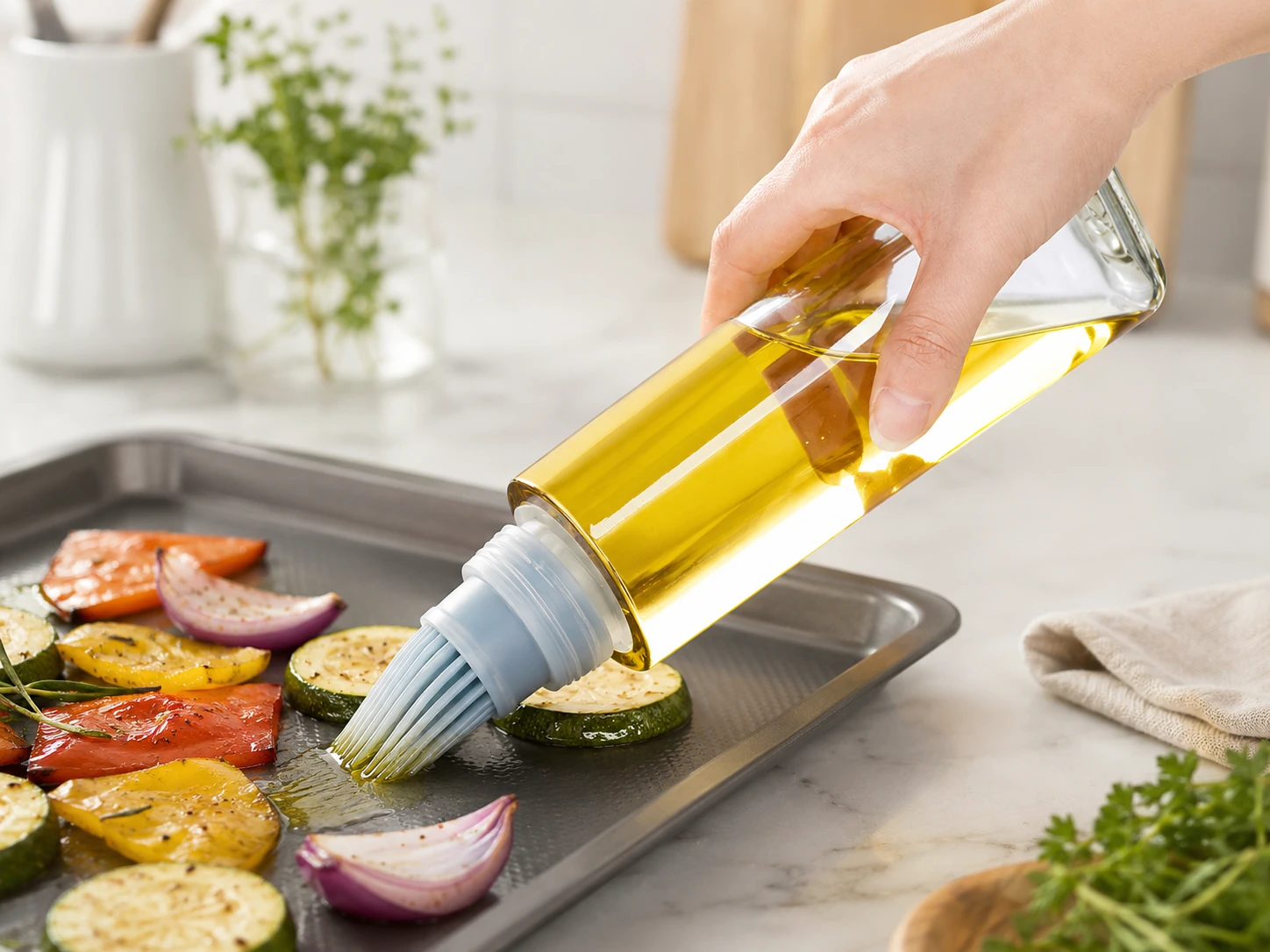
Öl sammelt sich oft als glänzender See in der Pfanne. Durch Neigen lässt es sich zwar verteilen, doch die erste Stelle wird immer noch stärker benetzt als die Ränder, und ein zweites Nachgießen kann schnell zu viel werden. Für einen leichten, gleichmäßigen Ölfilm fehlt meist der Kontakt: Irgendetwas muss das Öl auf der Oberfläche verteilen.
Ein Ölspender mit integriertem Pinsel macht das Verteilen des Öls direkt beim Kochen möglich. Der Koch muss weder eine separate Schüssel noch einen Backpinsel suchen und anschließend keine Öltropfen über die Arbeitsfläche tragen. Das Produkt klingt simpel. Seine Nützlichkeit hängt jedoch davon ab, was vor, während und nach dem Auftragen des Öls um den Pinsel herum geschieht.
Der SinoGlass-Ölspender mit Bürste Das Produkt basiert auf drei praktischen Details. Ein weicher Silikonpinsel verteilt das Öl gleichmäßig auf der Kochfläche. Ein spezieller Deckel verhindert, dass Öl in den Bereich des Pinsels gelangt. Ölreste am Applikator fließen zurück in die 270-ml-Flasche. Diese Details machen das Gerät zu mehr als nur einer Flasche mit einem Zubehörteil.
Warum kommt es vor dem Kochen zu einer ungleichmäßigen Ölverteilung?
Ein Guss erreicht zuerst eine Stelle
Ein Ausgießer kann den Ölstrahl zwar steuern, ihn aber nicht verteilen, sobald er die Pfanne berührt. Zuerst wird die Mitte benetzt. Auf einer breiten Pfanne, einem Backblech oder einer geriffelten Grillpfanne kann sich das Öl an den höchsten Stellen verteilen und an anderen Stellen trockene Stellen hinterlassen. Durch erneutes Nachgießen ändert sich die Ölmenge stärker als das Verteilungsmuster.
Ein Pinsel erfüllt eine andere Aufgabe. Er zieht das Öl vom ersten Kontaktpunkt weg und verteilt es zu einem breiteren Film. Der Koch kann erkennen, wo die Oberfläche glänzt und wo sie noch trocken aussieht. Dieses Feedback erleichtert kleine Korrekturen im Vergleich zu wiederholtem Nachgießen.
Eine separate Bürste sorgt für zusätzliche Unordnung.
Herkömmliche Backpinsel sind zwar praktisch, brauchen aber einen Platz zum Abstellen. Bei der schnellen Zubereitung von Speisen kann das bedeuten, dass ein Unterteller auf der Arbeitsfläche steht, der Pinsel auf einer Schüssel balanciert wird oder Öl zwischen Flasche und Pfanne tropft. Außerdem muss ein weiteres Utensil abgewaschen und weggeräumt werden.
Ein integriertes System verkürzt den Vorgang. Das Öl befindet sich bereits in der Flasche, der Pinsel ist Teil des oberen Teils, und überschüssiges Öl kann zurückfließen. Anstatt es mit einem einfachen Ausgießer zu vergleichen, ist es sinnvoller, Pinsel, Deckel, Flasche und Rücklaufmechanismus als ein einziges Werkzeug zu betrachten.
Ein weicher Silikonpinsel verteilt Öl auf der Kochfläche
Durch flexiblen Kontakt wird das Öl über den ersten Tropfen hinaus transportiert.
Der weiche Silikonpinsel passt sich der Pfanne an und verteilt das Öl mit jedem Strich. Er kann vom anfänglichen Ölfleck nach außen reichen und der Oberflächenform besser folgen als die Schwerkraft allein. Auf einer Grillpfanne kann der Pinsel auch über die Rillen hinweg arbeiten. Auf einem Backblech lassen sich mit langen Strichen die Ecken erreichen, ohne dass erneut viel Öl hinzugegeben werden muss.
Die Menge ist nach wie vor wichtig. Mit einer kleinen Menge zu beginnen, erleichtert das Auftragen einer dünnen Schicht und das Hinzufügen von Öl nur bei Bedarf. Ein Pinsel verbessert die Verteilung; er bestimmt jedoch nicht, wie viel Öl für das jeweilige Rezept geeignet ist.
Eine dünnere Schicht eignet sich für viele alltägliche Kochaufgaben
Eier, Pfannkuchen, Fladenbrote, Gemüse und Bratbleche benötigen oft eine großflächige Ölung ohne tiefe Ölpfützen. Durch den Pinselkontakt kann der Benutzer das Öl gezielt auf die Fläche auftragen, auf der die Speisen später liegen. Die Bewegung ist sichtbar, vertraut und leicht zu wiederholen.
Mit demselben Werkzeug kann man Lebensmittel vor dem Braten oder Grillen mit Öl bestreichen, sofern Rezept und Zubereitungsmethode geeignet sind. Die Temperatur- und Pflegehinweise für Öl, Kochgeschirr und Pinsel sollten weiterhin beachtet werden. Der Spender erleichtert die Zubereitung, ersetzt aber nicht die Gebrauchsanweisung.
Das Flaschen-und-Pinsel-Format ermöglicht die Anwendung mit nur einem Werkzeug.
Eine 270-ml-Flasche bleibt in der Nähe des Zubereitungsbereichs stehen.
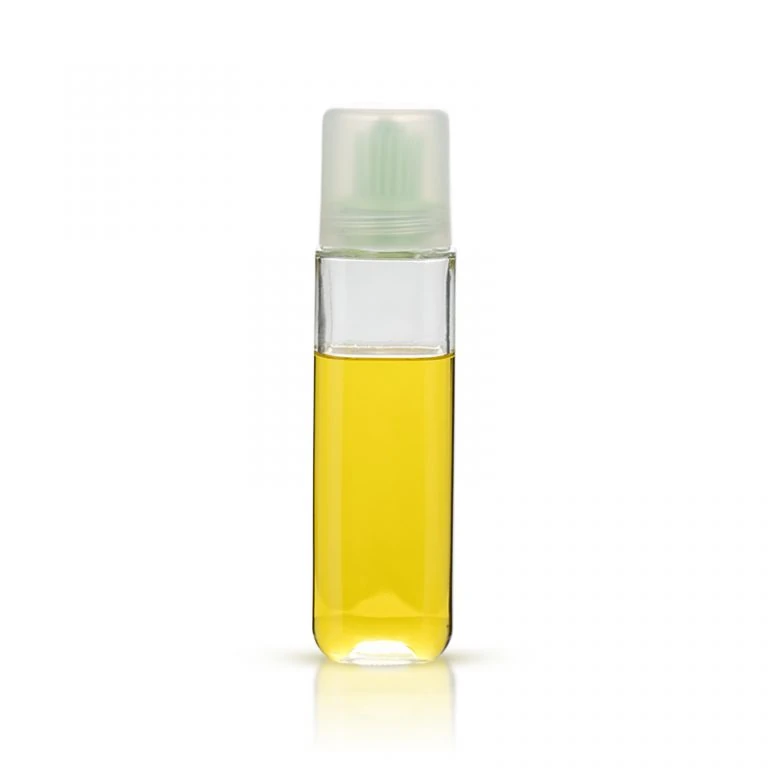
Die 270-ml-Größe fasst eine praktische Menge Speiseöl, ohne dass der Applikator zu einer sperrigen Flasche auf der Arbeitsfläche wird. Er kann in der Nähe des Herdes oder der Arbeitsfläche aufbewahrt werden und ist so jederzeit zum Einfetten von Pfannen, Braten oder Grillen griffbereit. Dank des integrierten Pinsels entfällt das Umfüllen des Öls in eine separate Schale vor der Verwendung.
Im Einzelhandel verleiht das kompakte Format dem Produkt eine klare Botschaft. Es kann als Hilfsmittel zum kontrollierten Verteilen von Olivenöl verkauft werden, nicht einfach als weiterer Behälter. Produktfotos sollten zeigen, wie der Pinsel eine Pfanne oder ein Tablett berührt, damit Käufer die Funktion sofort verstehen.
Der Deckel und der Ablaufkanal regeln, was nach dem Zähneputzen passiert.
Pinselspender neigen oft dazu, im Bereich des Applikators unordentlich zu werden. Öl kann sich unter dem Deckel sammeln, am Pinsel haften bleiben oder beim Abstellen des Deckels auf die Arbeitsfläche gelangen. Das Design von SinoGlass löst dieses Problem direkt: Der spezielle Deckel verhindert, dass gespeichertes Öl in den Pinsel gelangt, und überschüssiges Öl fließt zurück in die Flasche.
Dieser Rückfluss hält nutzbares Öl im Hauptkreislauf und reduziert die Menge, die sich um die obere Einheit herum ansammelt. Er bietet Käufern zudem einen konkreten Prüfpunkt an einer Probe. Öl auftragen, Pinsel wieder einsetzen, Flasche stehen lassen und anschließend den Deckelbereich und den Rückflussweg überprüfen. Das Ergebnis ist aussagekräftiger als die Beurteilung der Flasche anhand eines sauberen Studiofotos.
Wo macht eine gleichmäßige Ölabdeckung den größten Unterschied?
Pfannen auf dem Herd zeigen schnell übersehene Stellen
In einer Pfanne ist ein konzentrierter Ölstrahl leicht zu erkennen. Die Mitte glänzt, während der Rand matt bleibt. Mit einem Silikonpinsel lässt sich das Öl an den Rand und um die Stellen verteilen, wo das Essen liegen soll. Das ist besonders praktisch, wenn das Essen in der Pfanne verteilt ist und nicht in der Mitte.
Der Pinsel erleichtert zudem das Stoppen. Sobald die Oberfläche leicht glänzt, kann der Benutzer den Applikator zurücksetzen, anstatt erneut unkontrolliert etwas hinzuzugeben. Diese kurze Pause ist einer der Gründe, warum sich ein Kontaktwerkzeug beim Kochen im Alltag kontrollierter anfühlt.
Backformen und Grills benötigen eine Abdeckung über eine größere Fläche.
Backbleche, Grillpfannen und zum Braten vorbereitetes Gemüse bieten oft eine größere Oberfläche, als ein kurzes Bestreichen mit dem Pinsel abdecken kann. Wiederholte Pinselstriche verteilen das Öl gleichmäßig über ein Rechteck, um Unebenheiten herum oder über einzelne Stücke. Diese Methode ist zwar langsamer als ein großflächiges Ausgießen, aber dafür gezielter.
Unterschiedliche Öle und Oberflächen verhalten sich unterschiedlich, daher sollte die Bürste im vorgesehenen Anwendungsfall getestet werden. Für eine Produktbeschreibung im Einzelhandel, die sich an Backwaren richtet, sind möglicherweise Bilder einer großen Backform erforderlich, während für eine Grillwerbung Nahaufnahmen der Borsten beim Überfahren von Unebenheiten oder Grillgut benötigt werden. Das Produkt lässt sich leichter verkaufen, wenn die visuelle Demonstration dem Anwendungsfall entspricht.
SinoGlass vereint Bürstenleistung mit Flaschen- und Deckeldesign
Die drei funktionalen Details unterstützen eine Routine.
Der weiche Silikonpinsel sorgt für gleichmäßiges Auftragen. Der spezielle Deckel verhindert, dass Öl um den Applikator herum austritt. Überschüssiges Öl fließt durch den Rücklauf zurück in die Flasche. Keines dieser Details ist rein dekorativ; jedes kommt in einem anderen Anwendungsmoment zum Tragen: beim Auftragen, Verschließen und Aufbewahren.
Für Importeure, Händler und Eigenmarkenhersteller von Küchenartikeln bietet diese Vorgehensweise einen einfachen Test. Man füllt die Flasche, trägt Öl auf verschiedene Oberflächen auf, legt den Pinsel zurück und prüft den Deckel, nachdem die Flasche eine Weile gestanden hat. Der Test kann nach der Reinigung wiederholt werden, um zu überprüfen, ob die Teile weiterhin leicht zu handhaben sind.
Die Angebotsanfrage kann Flaschenkapazität, Fülllinie, Bürstenfarbe, Logoverfahren, Position der Messmarkierung, Anzahl der Verkaufsverpackungen und Kartongestaltung festlegen. Die Musterannahme kann auch Dichtheitsprüfungen des Deckels, Rücklaufverhalten, Passgenauigkeit der Bürste nach der Reinigung und den Zustand des Applikators nach wiederholter Verwendung umfassen.
Anpassungen können ein definiertes Einzelhandelsprogramm unterstützen.
SinoGlass kann Logo, Flaschengröße, Pinselfarbe, Messmarkierungen und Verpackung individuell gestalten. Bei einer Backzubehörlinie sind möglicherweise übersichtliche Messgrafiken und neutrale Pinselfarben von Vorteil. Ein farbenfrohes Küchengeräte-Sortiment legt hingegen mehr Wert auf das Design von Pinsel und Verpackung. Die grundlegende Funktion bleibt in beiden Fällen einfach zu erklären: Aufbewahren, Anwenden, Zurückgeben.
Weitere strukturelle Veränderungen können durch die SinoGlass OEM/ODM-Prozess,Dies umfasst Anforderungsanalyse, Prototypenbau, kundenspezifische Formgebung, Musterfreigabe, Serienproduktion und Qualitätskontrolle. Produktionsqualitätskontrollsystem Das Programm umfasst Spezifikationen, Lieferanten- und Wareneingangsprüfung, Prozesskontrollen, Endkontrolle, Verpackungsprüfung und Dokumentation. Diese Schritte bieten einem kommerziellen Programm klare Kontrollpunkte für Bürste, Deckel, Flasche, Kennzeichnung und fertige Verpackung.
Schlussfolgerung
Der Pinsel verteilt das Öl, doch Flasche und Deckel entscheiden darüber, ob die Anwendung angenehm bleibt. Weiches Silikon sorgt für einen dünnen Ölfilm. Der spezielle Deckel leitet das Öl um den Pinsel herum, und überschüssiges Öl wird zurück in den Behälter geleitet. Die 270-ml-Flasche vereint alle drei Funktionen in einem kompakten Produkt.
Bei Projekten für den Einzelhandel oder Eigenmarken kann die nächste Diskussion konkreter werden: geplante Kochszenarien, Flaschengröße, Pinselfarbe, Messmarkierungen, Logoposition, Anforderungen an den Deckel und Verpackung. Diese Details ermöglichen es, das Produkt so zu testen, wie es von Kunden verwendet wird, und nicht nur so, wie es im Regal präsentiert wird.
Häufig gestellte Fragen
Frage 1: Worin unterscheidet sich ein Ölspender mit Bürste von einer herkömmlichen Ölflasche?
A1: Eine Standardflasche dient zur Aufbewahrung und zum Ausgießen von Öl. Ein Pinselapplikator verteilt das Öl ebenfalls durch Kontakt. Das SinoGlass-Design umfasst einen speziellen Deckel und einen Rücklaufkanal, sodass Applikator und Aufbewahrungsmöglichkeit nach Gebrauch Teil desselben Produkts sind.
Frage 2: Kann der Spender auch für Olivenöl verwendet werden?
A2: Ja. Es ist für die Verwendung mit Speiseöl, einschließlich Olivenöl, konzipiert. Die Wahl des Öls, des Rezepts, des Kochgeschirrs, der Temperatur und der Reinigungsroutine sollten jedoch weiterhin die Verwendung und Pflege des Geräts bestimmen.
Frage 3: Welche Details kann SinoGlass anpassen?
A3: Logo, Flaschengröße, Pinselfarbe, Messmarkierungen und Verpackung können für ein Einzelhandelsprogramm angepasst werden. Strukturelle Anforderungen bezüglich des Deckels oder anderer Teile können während der Prototypenerstellung und Musterfreigabe geprüft werden.