
Une théière en verre paraît simple sur une étagère, mais les commandes en gros rencontrent souvent des problèmes de détails : ajustement du couvercle, qualité du filtre, solidité du carton, prise en main, performances thermiques annoncées et conformité de l’échantillon avec le produit final. Pour les détaillants, la question essentielle n’est pas seulement de savoir si le produit est esthétiquement réussi en photo. Il s’agit de savoir si la gamme peut être vendue, réapprovisionnée, emballée et expliquée sans générer de retours.
Ce guide présente des vérifications pratiques à effectuer avant de commander des théières en gros pour la vente au détail, les cadeaux, les marques privées ou les gammes d'articles de boisson lifestyle. Une théière en borosilicate peut être un produit de qualité si le fournisseur fournit des informations claires sur les matériaux, un assemblage stable et un emballage résistant au transport et à la manutention en rayon.
Pourquoi les acheteurs au détail ont-ils besoin d'une liste de contrôle pour l'approvisionnement en théières en verre transparent ?
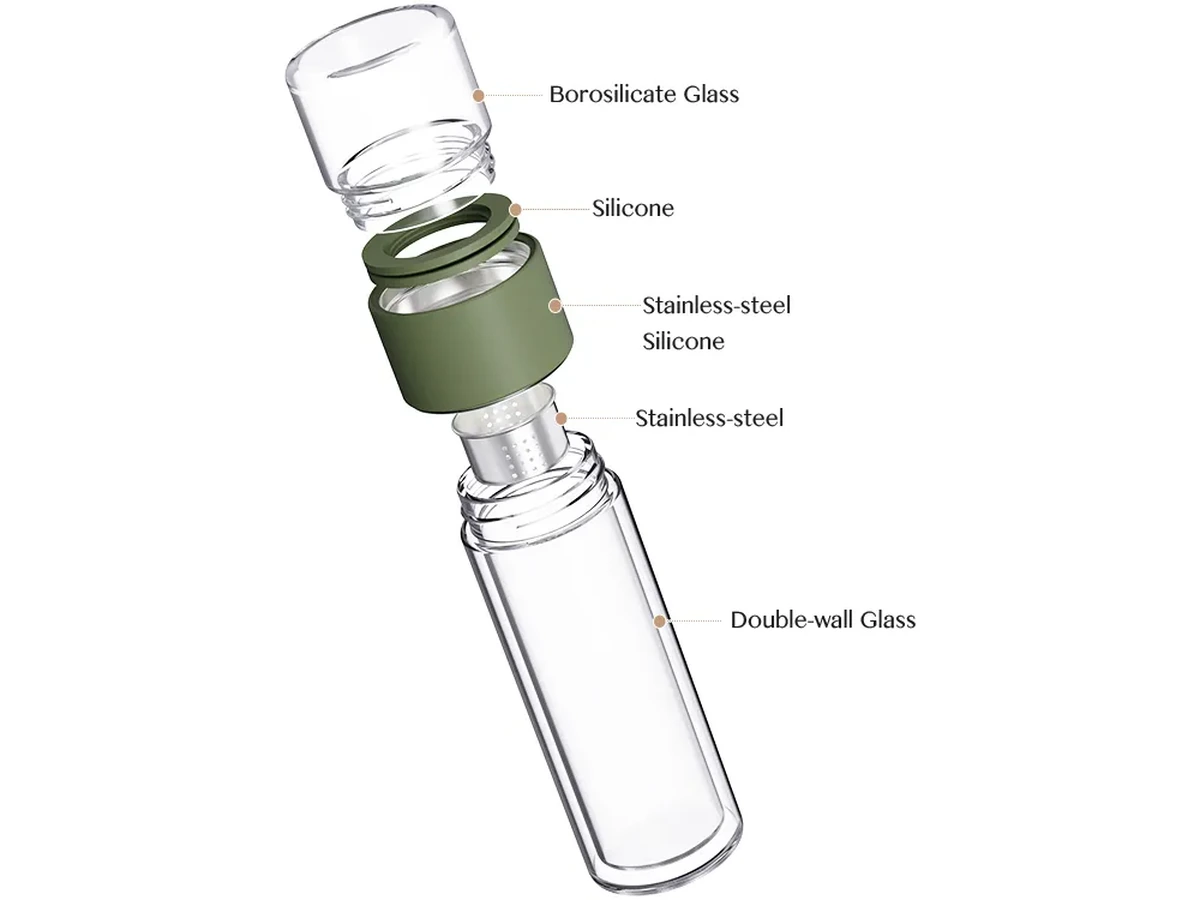
De nombreuses commandes de produits pour boissons commencent à partir d'une simple photo. C'est risqué. Les produits pour le thé comprennent généralement plusieurs éléments qui interagissent : le corps en verre, le filtre, le joint en silicone, le couvercle, la poignée, le manchon, les éléments de couleur, l'emballage et la notice d'utilisation. Un seul élément défectueux peut gâcher l'expérience d'achat, même si le corps en verre est de bonne qualité.
Pour les acheteurs du secteur de la vente au détail, une liste de contrôle d'approvisionnement permet de distinguer les échantillons attrayants des produits pouvant être produits en grande quantité. L'objectif est de déceler les problèmes avant la validation du bon de commande, et non après l'arrivée des marchandises en entrepôt.
Les risques courants liés aux commandes groupées comprennent :
- Filtres qui se tachent, se plient ou bougent pendant leur utilisation
- Joints en silicone qui semblent lâches après plusieurs ouvertures
- Les parties de couleur qui ne correspondent pas à l'échantillon approuvé
- Emballage qui paraît correct individuellement mais qui s'écrase dans les cartons de départ.
- Formulation peu claire concernant l'utilisation de la chaleur, à l'origine des plaintes des clients
- Combinaisons de références trop larges pour la première commande
Une théière en verre doit être considérée comme un produit à part entière, et non comme un simple tube en verre muni d'un filtre. Le fournisseur doit être en mesure d'expliquer la composition du produit, les pièces en contact avec les aliments, les options de personnalisation et la procédure de validation des échantillons avant la production en série.
Quels détails relatifs aux matériaux et à la structure faut-il vérifier en premier ?
Les matériaux et la structure influencent bien plus que le simple toucher d'un produit. Ils ont un impact sur les caractéristiques techniques, les instructions de nettoyage, le positionnement tarifaire et le service après-vente. Un acheteur comparant plusieurs devis doit demander des informations complémentaires, au-delà du simple prix unitaire. La demande de devis doit également inclure des précisions sur les matériaux, la capacité de production, la liste des composants, les caractéristiques des emballages et le délai de livraison des échantillons.
Allégations relatives au verre borosilicaté et à son utilisation à chaud
On choisit généralement une théière en verre borosilicate car les acheteurs recherchent un produit en verre plus léger, plus transparent et plus résistant à la chaleur que le verre sodocalcique ordinaire. Cela ne signifie pas pour autant que tous les produits peuvent être commercialisés avec les mêmes caractéristiques. L'utilisation finale doit correspondre exactement au modèle, à l'épaisseur du verre, aux éléments du couvercle, au filtre et au mode de consommation prévu.
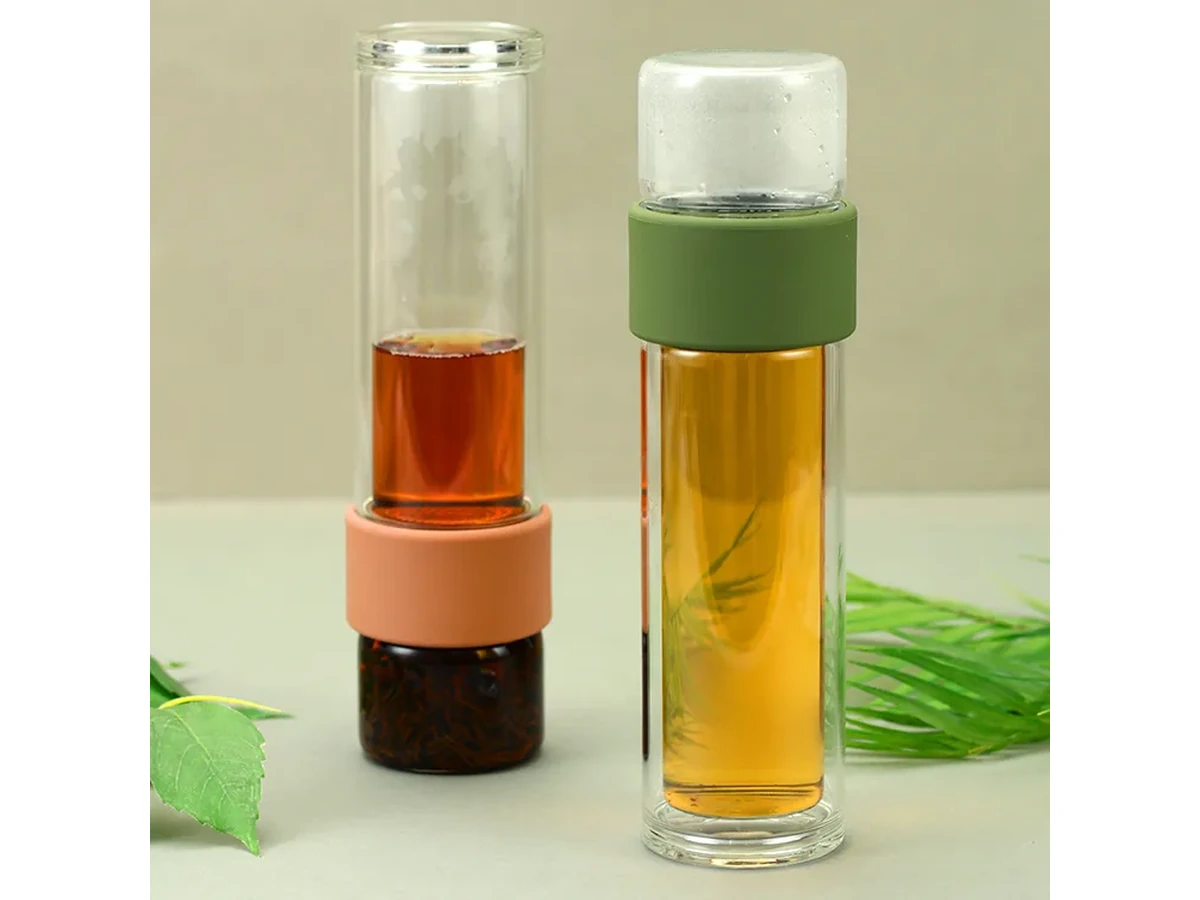
Par exemple, SinoGlass brasseur de thé en verre portable Fabriquée en verre borosilicate, en acier inoxydable et en silicone, cette théière à double paroi de 350 ml est conçue pour une infusion optimale. Grâce à ses compartiments supérieur et inférieur dédiés à l'infusion et à la dégustation, elle offre une position idéale pour une dégustation de thé plus précise.
Avant d'utiliser toute formulation relative à la chaleur sur les emballages ou les pages produits, les acheteurs doivent vérifier :
- Matériaux en verre et documents d'essais applicables
- Que le produit soit destiné au brassage, à la consommation ou aux deux.
- L'utilisation de la construction à double paroi est-elle envisagée ?
- La compatibilité du couvercle et du filtre avec une utilisation de boissons chaudes
- Instructions de nettoyage pour l'utilisateur final
Filtrer, sceller et profiter de l'expérience de dégustation
Le filtre est souvent l'élément que les consommateurs remarquent seulement après l'achat. Un filtre peu performant laisse des feuilles de thé libres dans la boisson. Un joint défectueux entraîne des fuites. Un couvercle difficile à ouvrir donne une impression de piètre qualité, même si le verre est de bonne facture.
C’est pourquoi les tests d’échantillons doivent inclure de véritables feuilles de thé, des ouvertures répétées, un nettoyage et, le cas échéant, des vérifications de manipulation à l’envers. L’acheteur n’a pas besoin de réaliser des tests aussi poussés qu’en laboratoire, mais l’échantillon doit subir les mêmes manipulations quotidiennes qu’un consommateur.
Pour une théière en verre, le filtre doit être stable, facile à retirer et à rincer. Les pièces en silicone doivent être propres, sans odeur ni irrégularités. Si le produit comporte un anneau ou une zone de préhension en métal, vérifiez si cela facilite la prise en main ou si c'est un simple ajout de coût sans réelle utilité.
Comment les acheteurs doivent-ils comparer les références des machines à thé pour les programmes de vente au détail ?
Un produit unique peut très bien se vendre en ligne, mais le commerce physique exige généralement une logique de référencement plus rigoureuse. Les acheteurs doivent déterminer si l'offre de thé est axée sur l'infusion pure, les boissons chaudes et froides mélangées, les coffrets cadeaux ou les contenants nomades. Une fois ce point clarifié, le choix des références devient plus simple.
Infuseurs portables pour une utilisation ciblée du thé
Une cafetière portable est un bon choix lorsque son argument de vente est clair : thé en vrac, consommation individuelle, infusion plus propre et une sensation plus haut de gamme que les gobelets jetables. Ce type de produit est plus facile à présenter pour les équipes commerciales, car le filtre, le corps et la fonction d’infusion convergent vers un même objectif.
Lors de l'achat en gros de théières de cette catégorie, privilégiez une première commande simple. Une seule capacité et deux couleurs stables sont souvent plus sûres que cinq couleurs et deux capacités différentes. Une gamme restreinte au départ permet à l'importateur de tester les ventes, de gérer les retours et de vérifier si les consommateurs préfèrent les couleurs neutres ou saisonnières.
Formats de tasses de voyage pour la demande mixte de thé et de café
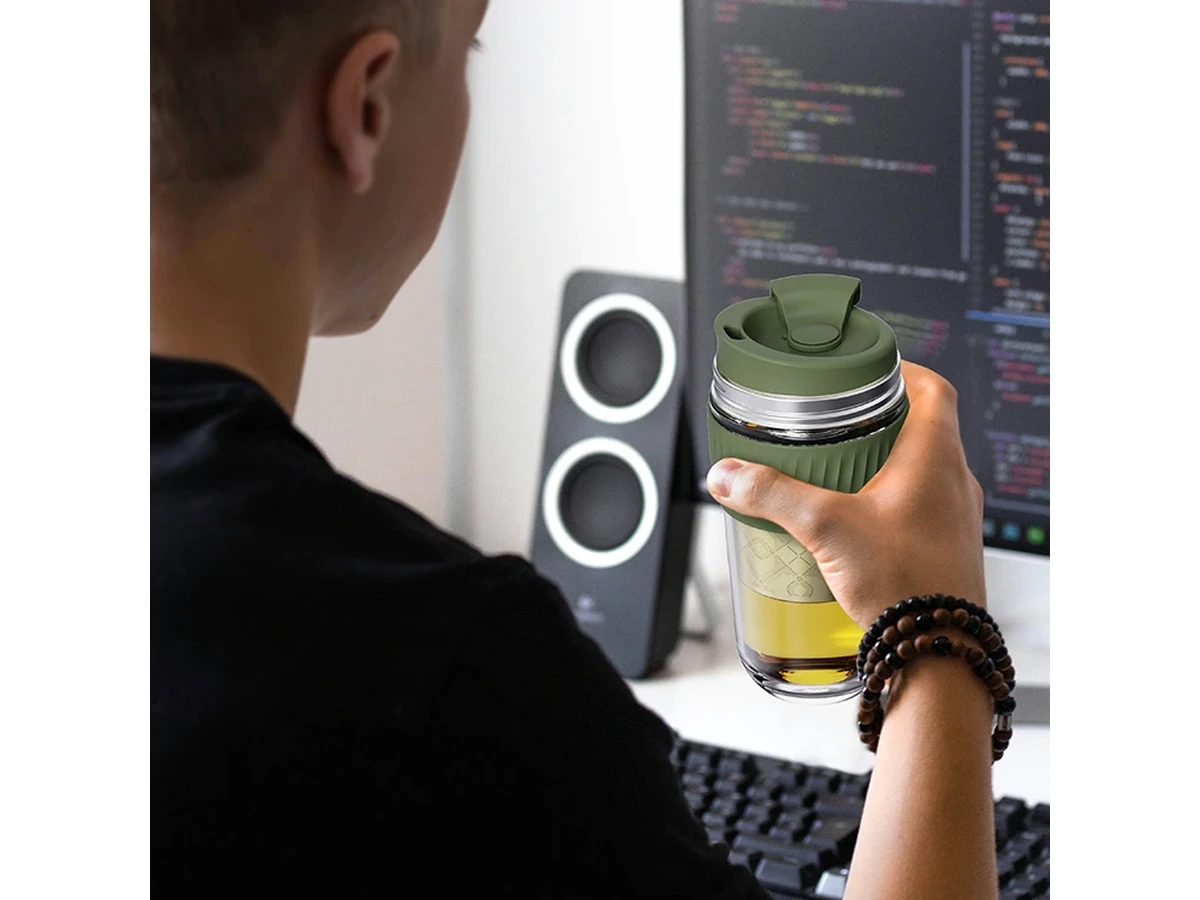
Certains détaillants recherchent des produits pour le thé qui puissent également être intégrés à un rayon plus général de gobelets. Dans ce cas, une tasse à filtre peut convenir pour le thé, le café et les eaux aromatisées, selon sa conception. tasse de voyage en verre Disponible en 360 ml et 540 ml, cette théière utilise un filtre amovible en acier inoxydable pour le thé et le café. Elle offre ainsi aux acheteurs une plus grande flexibilité pour la présenter dans différents rayons de produits pour boissons.
Un format de tasse plus large peut s'avérer pratique lorsque l'espace de rangement est limité. Toutefois, il est préférable d'éviter de qualifier systématiquement chaque tasse à filtre de théière, sauf si son utilisation est clairement indiquée. Si le filtre est amovible et que la forme s'apparente davantage à celle d'une tasse de voyage, la fiche produit et l'emballage doivent le préciser.
Pour les acheteurs qui envisagent une collection plus large de thés et d'articles pour boissons, le gobelet à café en verre Ce produit peut être utilisé comme référence complémentaire plutôt que comme théière principale. Ses deux options de dégustation et sa poignée pliable en font un gobelet polyvalent idéal au sein de la même gamme de produits.
Quels sont les détails d'emballage et de personnalisation qui affectent les producteurs de thé en vrac ?
L'emballage peut faire toute la différence entre un bon prototype et un produit rentable. Les théières contiennent des matériaux fragiles et de petites pièces ; l'emballage n'est donc pas qu'un simple élément décoratif. Il protège le verre, présente le produit, répond aux exigences en matière de codes-barres et de conformité, et offre à l'équipe commerciale une présentation plus claire.
Planification des emballages et des cartons de vente au détail
L'emballage doit présenter clairement le produit sans en faire trop. Les informations essentielles peuvent inclure la capacité, le matériau, le type de filtre, les instructions de nettoyage, les précautions concernant les boissons chaudes et l'étiquetage spécifique au pays. Si le produit est vendu via une plateforme de vente en ligne, ces mêmes informations permettent également de réduire les questions posées au service client.
Pour la planification des emballages, les acheteurs doivent demander la taille des boîtes (couleur), le conditionnement par caisse, le volume du carton et le poids final emballé. Ces informations influent sur le transport, le stockage, la palettisation et le réapprovisionnement des points de vente. Un produit qui semble légèrement moins cher peut coûter plus cher une fois l'emballage et l'expédition pris en compte.
Contrôle du logo, de la couleur et des accessoires
Les acheteurs de marques privées accordent généralement une grande importance à l'emplacement du logo, à la couleur du silicone, au motif, aux accessoires et au design de l'emballage. Ces options sont utiles, mais elles peuvent aussi engendrer des erreurs. Avant d'approuver la production en série, les acheteurs doivent exiger un échantillon signé ou un échantillon de référence pour chaque élément personnalisé visible.
SinoGlass accompagne les projets OEM pour les modèles de tasses et de flacons à thé, notamment en ce qui concerne la contenance, la couleur du silicone, le logo, le motif, les accessoires et l'emballage de certains produits. Les acheteurs souhaitant un contrôle total sur leur marque peuvent consulter les informations disponibles. Service OEM/ODM de SinoGlass avant de décider du niveau de personnalisation à inclure dans la première commande.
Une règle pratique : personnalisez ce qui contribue aux ventes, et non tout ce qui est modifiable. Pour un premier programme, la couleur du couvercle, le logo et l’emballage peuvent suffire. Les nouveaux moules, les nouveaux accessoires et les gammes de couleurs étendues peuvent attendre que l’acheteur dispose de données de vente.
Comment les acheteurs peuvent-ils évaluer un fournisseur de machines à thé avant de passer des commandes en gros ?
Il ne faut pas juger un fournisseur de machines à thé uniquement sur la base de photos de catalogue. Pour les commandes B2B, la qualité de ses réponses est souvent révélatrice du déroulement futur du projet. Des réponses claires concernant les matériaux, les délais d'échantillonnage, l'emballage, la personnalisation, le contrôle qualité et les délais de livraison sont bien plus précieuses qu'un devis anormalement bas et incomplet.
Tests d'échantillons avant les bons de commande
Les échantillons doivent être testés dans des conditions d'utilisation réelles. Remplissez le verre, préparez le thé, retirez le filtre, lavez les pièces, vérifiez la prise en main et inspectez la boîte après manipulation. Si le produit est destiné à être offert en cadeau, l'emballage et la présentation sont primordiaux. S'il est destiné à un usage quotidien, le nettoyage et la fiabilité du couvercle sont plus importants.
Demandez au fournisseur de confirmer que la commande finale utilisera bien les mêmes matériaux, moule, filtre, joint et emballage que l'échantillon. Toute modification apportée après validation de l'échantillon doit être consignée par écrit avant le début de la production.
Communication en matière de production et de contrôle qualité
Un fournisseur fiable doit être en mesure d'expliquer comment la qualité est contrôlée, des matières premières à la production et jusqu'à l'inspection finale. SinoGlass décrit son processus de production et de qualité, de la R&D à l'amélioration continue, en passant par la chaîne d'approvisionnement, le contrôle qualité à réception, la production et l'inspection finale. C'est essentiel pour les commandes en gros de verres et de bouteilles, car un simple problème au niveau d'un carton peut rapidement engendrer des centaines de réclamations de la part des détaillants.
Un acheteur n'a pas besoin d'un long discours d'usine. Les questions utiles sont simples :
- Qui confirme l'échantillon de référence ?
- Quels défauts sont vérifiés avant l'emballage ?
- Comment les filtres et les joints sont-ils inspectés ?
- Le fournisseur peut-il fournir des photos du carton avant l'expédition ?
- Qui gère les modifications si les illustrations de l'emballage nécessitent une correction ?
Si les réponses sont vagues, la commande comporte toujours des risques. En revanche, si le fournisseur fournit des documents clairs et assure une communication régulière, le projet est plus facile à maîtriser.
Conclusion
L'approvisionnement en théières en verre ne se résume pas à trouver le prix le plus bas. Il s'agit d'adapter la conception du produit, les matériaux, la fonction de filtration, l'emballage et la qualité du service du fournisseur aux modalités de vente. Les acheteurs au détail doivent comparer l'ensemble du système : corps en verre, couvercle, joint, filtre, carton, options personnalisées, confirmation de l'échantillon et possibilité de commandes répétées.
Pour une offre de thé ciblée, une cafetière portable permet de mettre en valeur le produit de façon optimale. Pour une gamme plus étendue de verres, les tasses à filtre et les gobelets isothermes contribuent à une plus grande flexibilité dans le choix des références. SinoGlass propose plusieurs produits pour le thé et les verres répondant à ces besoins, ainsi qu'un service OEM/ODM pour les clients souhaitant personnaliser leur logo, leurs couleurs, leurs accessoires ou leur emballage. Pour toute information concernant la capacité, l'emballage et la personnalisation propres à un projet, les clients peuvent… Nous contacter avant de confirmer un plan de commande groupée.
Questions fréquentes
Q1 : Que doivent vérifier en premier lieu les acheteurs au détail avant de commander une théière en verre ?
A1 : Vérifiez le matériau du verre, l'ajustement du filtre, la qualité du joint, la solidité de l'emballage, la cohérence de l'échantillon et l'étiquetage final pour la vente au détail avant de passer commande.
Q2 : Peut-on personnaliser les machines à thé en vrac pour les programmes de marques privées ?
A2 : Oui. Nous pouvons discuter du logo, de la couleur, du motif, des accessoires, de la capacité et de l’emballage en fonction du modèle sélectionné et des exigences de la commande.
Q3 : Comment les acheteurs doivent-ils choisir un fournisseur de machines à thé ?
A3 : Choisissez un fournisseur de machines à thé qui fournit des échantillons clairs, des détails sur les matériaux, des données sur l'emballage, des étapes de contrôle qualité et une communication stable sur le projet.