
Un moulin à café manuel est souvent perçu comme un simple accessoire parmi les produits pour le café. C'est précisément pourquoi les acheteurs le choisissent parfois trop vite. Le produit peut paraître simple sur la photo d'un catalogue, mais une fois en rayon, les détails deviennent évidents : réglage de la mouture, prise en main, étanchéité du récipient, dimensions de la boîte, emplacement du logo et possibilité pour le fournisseur de reproduire le même modèle lors d'une prochaine commande.
Pour les marques de café privées, un moulin à café ne doit pas être perçu comme un simple accessoire. Il doit contribuer à valoriser le produit. Les torréfacteurs, les détaillants d'articles ménagers, les marques de cadeaux et les distributeurs de matériel de café ont généralement besoin d'un moulin à café manuel au design épuré, au fonctionnement fluide et compact. SinoGlass nous accompagnons les acheteurs qui ont besoin de produits de verrerie et d'articles de cuisine pouvant passer de contrôles d'échantillons à des commandes de détail régulières.
Il est plus rigoureux de vérifier le produit en tant qu'article commercialisable, et non pas seulement comme un échantillon d'usine. Un moulin à café manuel comporte des pièces mobiles, des composants en contact avec les aliments et doit répondre à des exigences d'emballage spécifiques. Un bon fournisseur de moulins à café devrait aider les acheteurs à confirmer tous ces éléments avant la production, et non après la validation de la commande.
Pourquoi l'adéquation du produit est-elle importante avant le prix d'un moulin à café ?
Un prix bas n'est utile que si le produit s'intègre au circuit de distribution. Si le moulin à café manuel ne correspond pas à la gamme de produits de marque distributeur, même un prix attractif ne facilitera pas sa vente. Les acheteurs doivent d'abord déterminer si le moulin est destiné à un coffret cadeau de torréfacteur, à une étagère d'ustensiles de cuisine, à un kit café maison en ligne ou à une gamme plus large d'accessoires pour le café.
Les lignes de café ont besoin de plus d'un produit principal
De nombreuses marques de café de distributeur proposent d'abord des tasses, des cafetières à piston, des kits pour café filtre ou des boissons froides. Un moulin à café manuel peut compléter cette gamme, car il intervient directement dans la préparation, avant l'infusion. Il incite ainsi le client à acheter plusieurs articles de la même marque.
L'essentiel est de choisir un moulin à café facile à expliquer. Un consommateur doit comprendre en quelques secondes la raison d'être de ce produit. Si les explications sont trop longues, il sera peut-être plus adapté à un circuit de distribution spécialisé qu'à la grande distribution.
Le positionnement du moulin à café manuel doit rester dégagé.
Un moulin à café manuel est différent d'un moulin électrique, d'un moulin à expresso ou d'un moulin à café professionnel. Bien que ces mots-clés puissent générer un volume de recherche important, ils ne correspondent pas bien à ce produit. Pour cet article, les termes « moulin à café », « moulin à café manuel » et « moulin à café à main » sont plus appropriés, car ils correspondent à l'utilisation du produit tout en assurant une bonne visibilité dans les résultats de recherche.
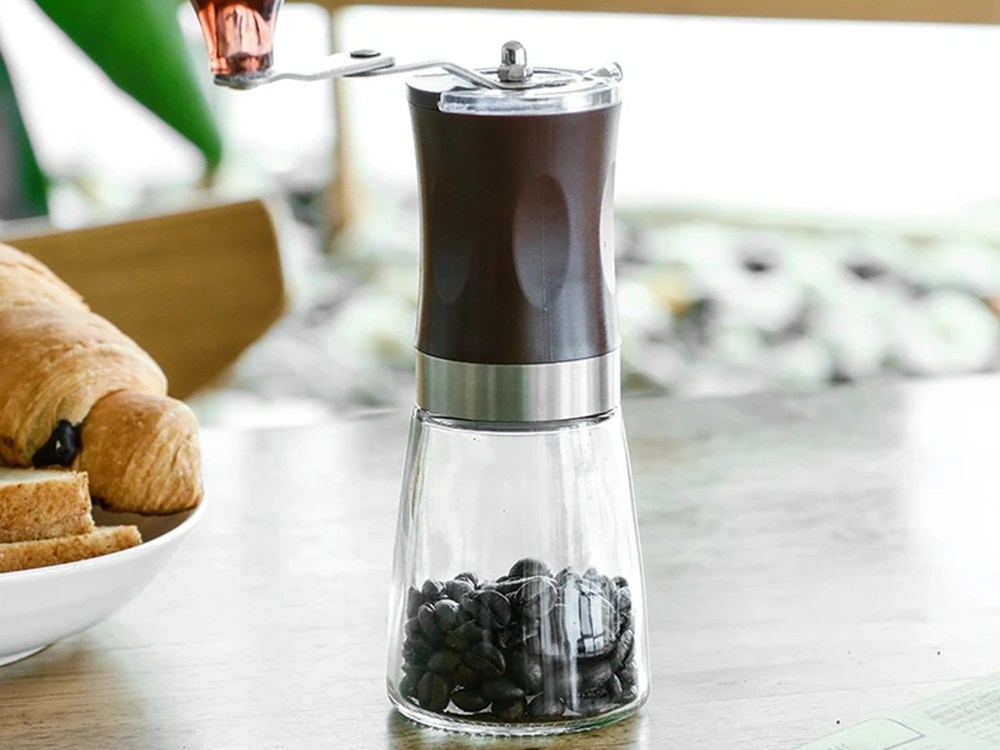
Ce moulin à café manuel en verre Ce produit offre aux acheteurs une base solide pour ce type de marque privée. Il est composé d'un bocal en verre, d'une poignée pliable, d'un couvercle séparé, d'un mécanisme en céramique et d'un réglage fin ou grossier. Ces détails sont faciles à intégrer dans les descriptions des fiches produits, les emballages et les supports de vente.
L'utilisation d'exemples doit guider le discours de vente
Les acheteurs ne devraient pas se fier uniquement à l'apparence d'un moulin à café manuel. Il est conseillé de le tester avec de vrais grains de café. Tournez la manivelle, ajustez la mouture, refermez le récipient, repliez la manivelle et remettez le produit dans sa boîte. Ce test sera bien plus instructif qu'une simple photo.
Si le broyeur semble intuitif lors des tests d'essai, la vente s'en trouve facilitée. En revanche, s'il paraît rigide, complexe ou fragile, ce problème risque fort d'être perçu par les clients.
Quelles caractéristiques d'un moulin à café les acheteurs doivent-ils vérifier en premier ?
Un moulin à café doit être agréable à utiliser. Les acheteurs doivent vérifier les caractéristiques qui influencent à la fois l'expérience utilisateur et le fonctionnement du point de vente. Certains détails facilitent le choix du client. D'autres contribuent à réduire les déchets d'emballage, les retours ou les problèmes de communication avec les fournisseurs.
Le réglage de la mouture nécessite une logique utilisateur claire
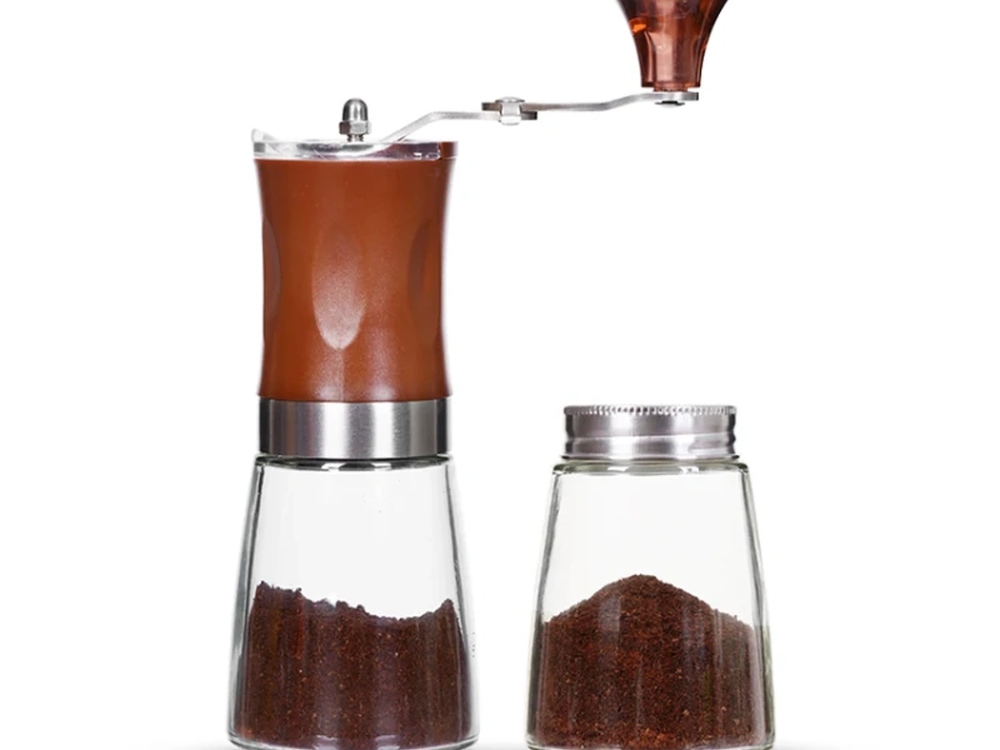
Un moulin à café manuel doit permettre un réglage facile de la mouture. Ce réglage, de fin à grossier, est un élément essentiel de la description du produit, car les amateurs de café utilisent différentes méthodes d'infusion. Certains préfèrent une mouture fine pour le café filtre ou le café infusé à la verseuse, tandis que d'autres privilégient une mouture plus grossière pour la cafetière à piston.
Pour les acheteurs de marques de distributeur, la question essentielle est de savoir si cette fonctionnalité est compréhensible sans instructions interminables. Si l'utilisateur comprend rapidement le réglage, le produit se vend plus facilement en ligne et en emballage de vente au détail.
Un mécanisme en céramique pour une meilleure présentation du produit
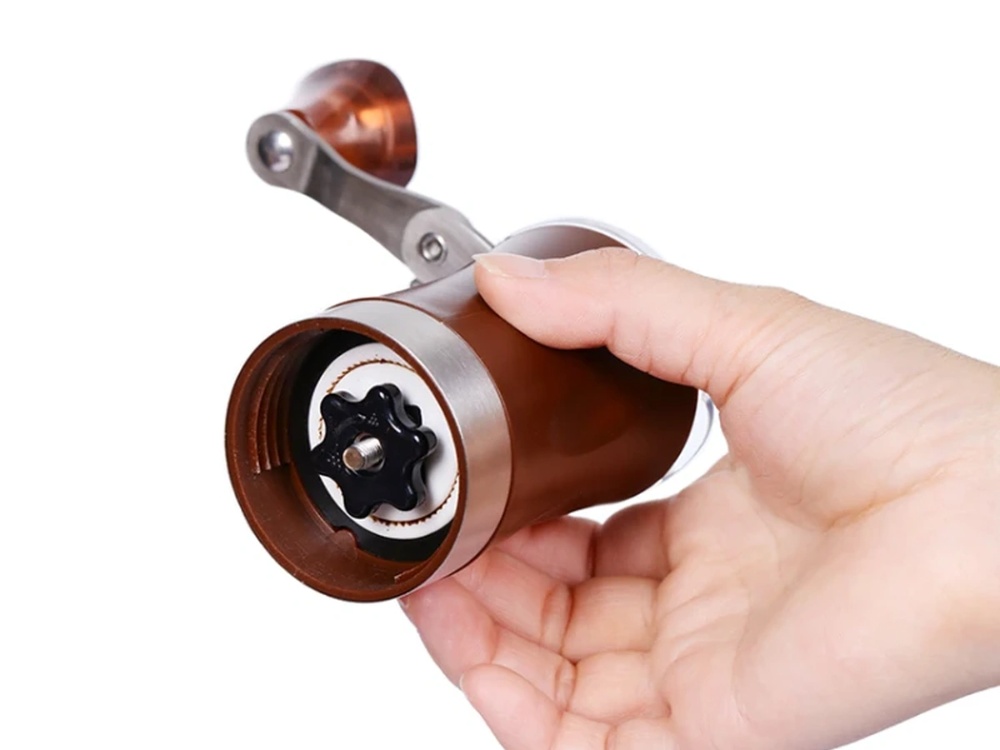
Le mécanisme en céramique est l'une des principales raisons pour lesquelles un moulin à café manuel en verre se distingue d'un moulin bas de gamme. Un moulin en céramique offre également aux acheteurs un argument de vente plus concret que des termes génériques tels que « haut de gamme » ou « qualité supérieure ».
Un fournisseur de moulins à café devrait être capable d'expliquer le mécanisme, et non se contenter de mentionner le terme « céramique ». Les acheteurs peuvent demander un échantillon et des photos détaillées de la pièce de broyage avant de confirmer une commande en gros.
La poignée pliable facilite le rangement et l'emballage
La poignée pliable est pratique pour le consommateur, mais elle a aussi son importance pour l'emballage. Un format plus compact et épuré facilite la conception des boîtes, l'agencement des cartons et l'organisation du transport. Ce détail ne doit pas être relégué à la description du produit.
Pour les acheteurs, la poignée pliable allie praticité et économies. Elle facilite le rangement du produit à domicile et son emballage pour la vente au détail.
Comment les acheteurs doivent-ils gérer les quantités minimales de commande, l'emballage et la personnalisation ?
Les projets de marques privées rencontrent souvent des difficultés lorsque la personnalisation est entreprise trop tard. Un moulin à café manuel, par exemple, peut nécessiter l'emplacement du logo, le visuel de la boîte, le texte du mode d'emploi, la position du code-barres, la confirmation des couleurs et les étiquettes du carton. Ces tâches ne sont pas complexes, mais elles requièrent un processus de commande rigoureux.
La quantité minimale de commande (MOQ) doit correspondre au premier test de vente.
La page produit indique une quantité minimale de commande de 600 pièces pour ce moulin à café manuel en verre. La première commande doit être adaptée à la taille du réseau de distribution et au plan de lancement de l'acheteur. Une nouvelle gamme d'accessoires pour le café ne nécessite pas forcément un grand nombre de couleurs ou de versions groupées dès son lancement.
Un seul produit, un seul design de boîte transparente et un seul emplacement de logo validé suffisent pour ce premier test. Une fois les données de vente recueillies, l'acheteur pourra ajouter des versions en coffret cadeau ou des couleurs secondaires.
L'emballage doit protéger le bocal en verre.
Un moulin à café manuel comprend un bol en verre et des pièces mobiles ; son emballage ne doit donc pas se limiter à la décoration. La boîte doit protéger le moulin, expliquer son fonctionnement et présenter le produit comme prêt à la vente. Les acheteurs doivent se renseigner sur les dimensions de la boîte, du carton d'expédition, son poids et demander des photos du produit emballé.
Si le produit est vendu en ligne, l'emballage doit résister aux contraintes de la manutention en entrepôt. S'il est vendu en magasin, les panneaux avant et latéraux doivent permettre d'identifier rapidement le fonctionnement du moulin à café manuel.
Les options personnalisées doivent rester ciblées
Le Catégorie Moulin à café Nous proposons une gamme de moulins à café compatibles avec des accessoires de marque privée. Pour la plupart des premières commandes, le logo, l'emballage et quelques couleurs suffisent. Modifier trop d'éléments simultanément risque de ralentir la production et d'augmenter le risque de refus.
Si l'acheteur a besoin d'un développement personnalisé plus étendu, Service OEM/ODM de SinoGlass peut accompagner le processus depuis la conception et la validation des échantillons jusqu'à la production et le contrôle qualité.
Comment les acheteurs peuvent-ils comparer les fournisseurs de moulins à café ?
Un fournisseur de moulins à café doit contribuer à réduire l'incertitude avant la production. Le meilleur fournisseur n'est pas seulement celui qui propose le prix le plus bas. Les acheteurs ont besoin de réponses claires concernant les échantillons, les matériaux, le mécanisme, l'emballage, la quantité minimale de commande, le contrôle qualité et les modalités de réapprovisionnement.
Les tests fonctionnels devraient précéder l'approbation.
Lors des tests d'échantillons, il est conseillé aux acheteurs de moudre de vrais grains de café. Cela permet de vérifier la stabilité du moulin à café manuel, la fluidité de la rotation de la manivelle et la clarté du réglage de la mouture pour le client cible.
Cela aide également les acheteurs à décrire le produit. Si le moulin convient à plusieurs méthodes d'infusion courantes, cette information peut être mentionnée sur la page produit et l'emballage.
Le contrôle qualité doit inclure les pièces mobiles.
Un simple contrôle visuel ne suffit pas pour un moulin à café. Il est impératif de vérifier le récipient, le couvercle, la poignée, le mécanisme, le logo et l'emballage. Les acheteurs doivent se renseigner sur la méthode de contrôle des pièces mobiles par le fournisseur et demander si des photos du produit fini peuvent être fournies avant l'expédition.
Pour les commandes de marques privées, le fournisseur doit également conserver à jour les fichiers relatifs à l'échantillon approuvé, au visuel et à l'emballage. Les commandes ultérieures dépendent de ces documents.
Il convient de prendre contact avant la finalisation de l'œuvre.
Si les acheteurs attendent la finalisation des illustrations avant de confirmer les détails du produit, de petites modifications peuvent engendrer des retards. Il est préférable de confirmer d'abord le modèle, la capacité, la zone du logo, la structure de l'emballage et le délai de livraison des échantillons.
Les acheteurs préparant une commande de moulin à café manuel de marque privée peuvent utiliser le page de contact de SinoGlass pour confirmer les détails du produit, les besoins de personnalisation et la planification de la commande avant d'émettre un bon de commande.
Conclusion
Un moulin à café manuel peut constituer un atout majeur pour les marques de distributeur, car les acheteurs considèrent le produit comme un article de consommation courante et non comme un simple accessoire. Les points essentiels à prendre en compte sont le réglage de la mouture, le mécanisme en céramique, le couvercle hermétique du bocal en verre, la poignée pliable, la quantité minimale de commande, l'emballage et le service client.
Ce moulin à café manuel en verre offre aux acheteurs une base pratique pour leurs accessoires de café, car il est facile à comprendre et à connecter aux équipements de préparation du café. Pour les acheteurs comparant les fournisseurs de moulins à café, le meilleur choix est celui qui propose des tests d'échantillons, un contrôle de l'emballage, des solutions sur mesure et une qualité constante pour les commandes répétées.
Questions fréquentes
Q1 : Que doivent vérifier les acheteurs avant d'acheter un moulin à café manuel ?
A1 : Vérifier le réglage de la mouture, le mécanisme en céramique, l'étanchéité du pot, la prise en main, la quantité minimale de commande, l'emballage et la consistance de l'échantillon.
Q2 : Ce moulin à café manuel en verre peut-il prendre en charge les projets de marque privée ?
A2 : Oui. Nous pouvons discuter du logo, de l’emballage, de la couleur, des accessoires et d’autres détails OEM en fonction des besoins de la commande.
Q3 : Comment les acheteurs peuvent-ils comparer un fournisseur de moulins à café ?
A3 : Comparer la qualité des échantillons, la stabilité du mécanisme, le support d'emballage, le processus d'inspection, la quantité minimale de commande et la communication sur les commandes répétées.