
A container of olive oil typically sits next to the cooking surface, near warmth, moisture from steam, direct light, and damp fingers. It seems like a minor aspect of kitchen setup, but this item interacts with meals on a regular basis. When such a container stores items like garlic, chili, rosemary, or vinegar, the build material becomes even more important. An oil holder in the kitchen ought to avoid adding scents, holding onto leftover bits, or causing spills during use.
This explains why numerous home chefs, store owners, and custom kitchen tool purchasers weigh plastic against glass. Plastic might offer lightness and a budget-friendly price, yet oil proves challenging to keep properly. It retains tastes, picks up unwanted smells, and often remains in the same holder for several weeks. A glass oil infuser constructed from quality borosilicate glass provides a purer, more transparent, and dependable option for kitchen tasks.
Why Oil Bottle Material Matters
Oil dispensers qualify as items that touch food directly. They might contain olive oil, vinegar, chili oil, herb-infused oil, or dressings for salads. These fluids often react poorly to scent mixing, weak closures, and tough scrubbing. A reliable oil dispenser needs to guard the contents while making routine meal prep straightforward.
For everyday users, selecting the correct material leads to improved taste management and reduced effort in upkeep. For companies and sellers, it results in fewer issues from customers and better display appeal. A borosilicate glass infuser addresses these points effectively, as it blends useful protection with an upscale appearance that shoppers notice right away.
Glass vs. Plastic in Daily Kitchen Use
Plastic frequently stands out for its low weight and initial affordability. However, kitchen environments pose tough conditions for any container. Warmth, sticky oil remnants, frequent rinsing, and bold flavors can wear down fragile materials in a short time. Prior to selecting a kitchen oil bottle, it pays to consider the actual settings near a stove, in storage areas, or on shop shelves.
Odor, Flavor, and Staining
Oil holds aroma well. That is why basil, pepper, garlic, and chili can turn plain oil into a richer ingredient. The same feature also means oil can carry unwanted smells from the container. Some plastic bottles may retain odor after repeated use, especially when they hold strong herbs or flavored oil.
In comparison, glass features a slicker, less sticky outer layer. Thus, a glass oil infuser rarely traps lingering aromas or marks following a good wash. This aspect counts a lot when switching uses, like from olive oil one period to vinegar or chili oil the next. Overall, a safe oil dispenser must ensure every fluid retains its own distinct flavor.
Heat and Long-Term Appearance
Plenty of individuals place oil bottles close to the heating area. Even absent immediate fire, these holders encounter heated surroundings, vapor, and quick shifts in temperature. Over time, plastic may turn foggy, marked with lines, or bent out of shape. While this does not signal instant breakdown, it often shortens the item’s lifespan and erodes confidence in it.
Borosilicate glass of high grade appears commonly in kitchen tools due to its superior handling of temperature variations over standard glass. It remains glass, so people should steer clear of harsh treatment and severe heat jumps. Nevertheless, for a kitchen oil bottle positioned near prep zones, high borosilicate glass delivers a more durable and spotless narrative about the material.
Why High Borosilicate Glass Fits Oil Infusion
Oil infusion is more than storage. Herbs, peppers, spices, and garlic may stay inside the bottle while flavor slowly moves into the oil. Because that contact lasts for days or weeks, the main bottle body should be stable, easy to inspect, and simple to clean.
Cleaner Contact for Herbs and Spices
A borosilicate glass infuser lets users see what is happening inside. They can check oil color, herb condition, and remaining volume before cooking. This clear view is useful, not only decorative. It helps users avoid old ingredients and gives the product a fresh, honest look on the counter.
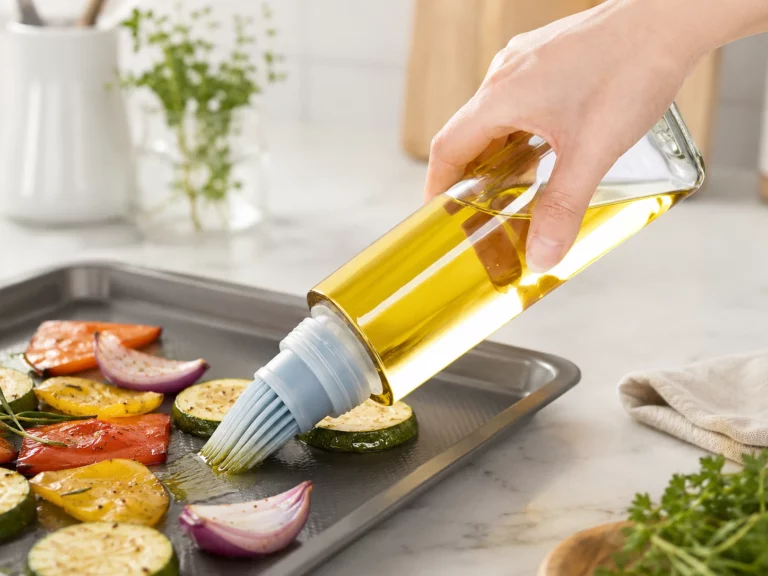
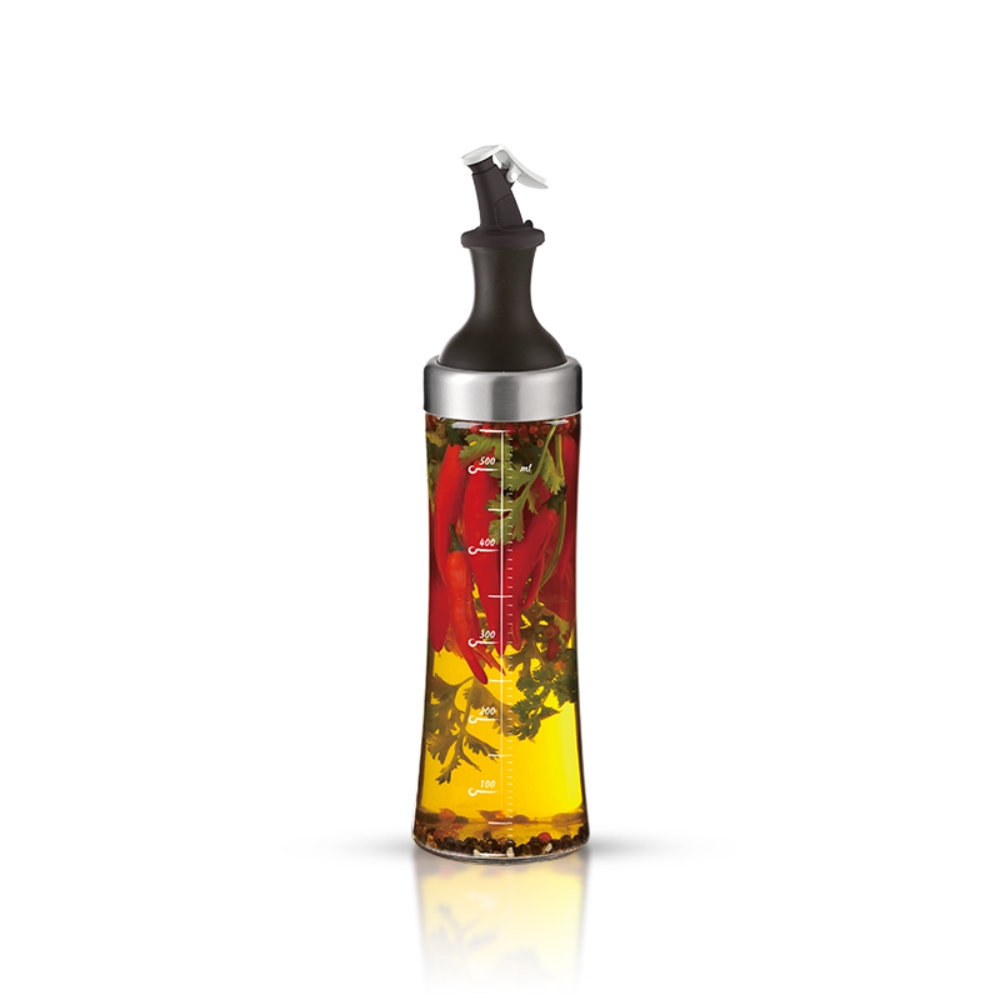
SinoGlass offers an Olive Oil Infuser Bottle with a 570ml capacity, borosilicate glass bottle body, food-grade plastic filter, silicone lid, and stainless steel parts. Its 2-in-1 design works as both an oil dispenser and an herb oil maker, which fits home kitchens, gift sets, and branded kitchenware lines.
Cleaner Pouring and Less Waste
Safety also includes how the bottle works in the hand. A poor spout can leave oil on the counter, label, shelf, and user’s fingers. In retail, that can lead to negative reviews. At home, it creates waste and extra cleaning.
- A well-designed glass oil infuser should include:
- A controlled spout for steady pouring
- A cap that opens without struggle
- A filter that keeps herbs inside
- A secure bottle shape for everyday grip
- Removable parts for easier cleaning
The SinoGlass bottle uses a non-drip spout, one-finger operated cap, removable integrated filter, and soft silicone lid. These features help the bottle feel simple, not overdesigned.
The BPA-Free Question Buyers Should Ask
“BPA-free” is now a common phrase in food-contact kitchenware. It is useful, but it should not be treated as the whole safety standard. A BPA-free oil infuser still needs suitable materials, stable seals, cleanable parts, and clear instructions for real cooking use.
A glass-first design reduces the amount of plastic touching stored oil. Since oil often remains in the bottle for a long time, the main food-contact surface matters. With high borosilicate glass as the body, the largest contact area is not plastic. Filters, lids, and spouts can still use selected materials for sealing, pouring, or filtering herbs.
For B2B buyers, compliance should match the sales market. A safe oil dispenser for the United States, Europe, or the Middle East may need different food-contact documents, carton marks, or packaging statements. Material choice, test reports, logo placement, and cleaning guidance should be discussed before mass production.
What Makes a Better Kitchen Oil Bottle for Retail
A consumer may notice the glass first, but they keep using the bottle because of daily details. Does it pour cleanly? Can the filter be removed? Is the size right? Does it look good beside other kitchen items?
A 570ml glass oil infuser is practical: large enough for regular cooking, but not so large that infused oil is forgotten. Clear glass also helps users see when oil is running low and improves shelf appeal.
SinoGlass also offers wider kitchenware and drinkware products, including oil dispensers, storage jars, spice jars, water bottles, and mugs. This matters for buyers who want matched product ranges. A kitchen oil bottle can sit inside a larger cooking, seasoning, or home storage collection.
How SinoGlass Supports Custom Oil Infuser Projects
Choosing the right product is only one part of the buying process. Brands also need the right logo method, lid color, packaging, sample review, and carton plan. A good supplier conversation should turn a general product idea into a clear item that fits target users, shelf price, and market rules.
SinoGlass provides OEM/ODM kitchenware service with steps such as requirement review, prototyping, custom molding, sample confirmation, bulk production, and quality inspection. Its olive oil infuser bottle also lists customization options including logo, bottle size, lid color, measurement marks, and packaging. The item has a 200-piece MOQ, which can suit trial orders or early product testing.
For retailers, distributors, and private-label brands, the next step is to prepare the target market, expected order size, packaging style, and material requirements. Then buyers can contact SinoGlass to discuss samples, customization, and matching products. A safer bottle starts with the right material, but it becomes stronger through careful development.
Conclusion
Both glass and plastic find roles in kitchen tools, but they deliver distinct outcomes for oil keeping and flavor blending. Oil maintains direct touch with the holder, absorbs tastes readily, and frequently sits by warmth sources. These factors position high borosilicate glass as a solid pick for those valuing security, visibility, maintenance ease, and lasting worth. Additionally, a glass oil infuser presents a more elegant vibe while lessening dependence on plastic for the central structure. For companies and household cooks, the top selection goes beyond the lowest price tag. It centers on a safe oil dispenser that flows smoothly, accommodates plants, and aligns with genuine cooking routines.
FAQs
Q: Is a glass oil infuser safer than plastic?
A: Usually yes. Glass resists odor better and suits long oil contact.
Q: Why choose a borosilicate glass infuser?
A: It offers clarity, better heat resistance, and a more premium kitchen feel.
Q: Can SinoGlass customize a BPA-free oil infuser?
A: Yes. Buyers can discuss materials, logo, lid color, size, and packaging.