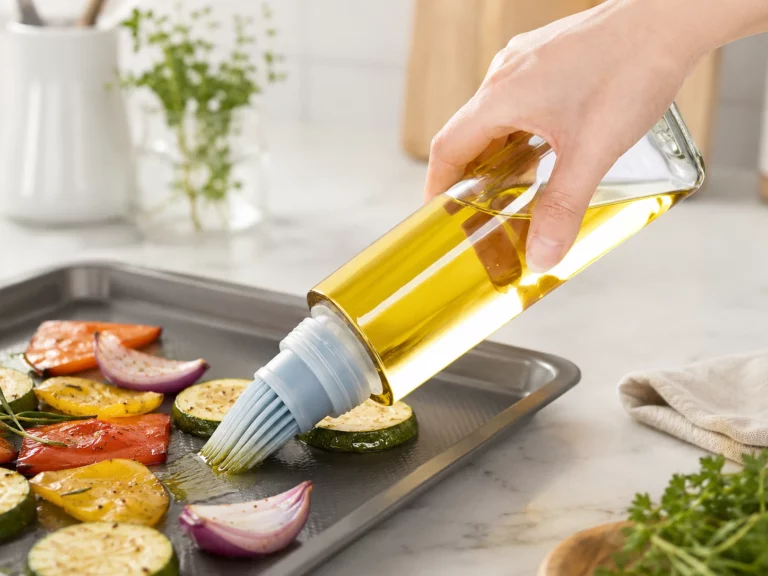

On a souvent tendance à sous-estimer la qualité d'un flacon distributeur d'huile en verre jusqu'à ce que l'échantillon soit rempli, incliné, emballé et expédié. Pour un acheteur d'articles de cuisine, la question pertinente n'est pas seulement de savoir si le flacon paraît propre sur un plan de travail. Il s'agit aussi de vérifier si le bec verseur fonctionne correctement, si le flacon est stable une fois rempli et si l'emballage le protège efficacement tout au long du circuit de distribution.
Pour les importateurs, les équipes des supermarchés, les vendeurs en ligne et les marques de distributeur, SinoGlass Ce guide peut servir de référence pratique pour l'approvisionnement en bouteilles d'huile, pots à épices, bocaux de conservation, moulins et autres articles de cuisine en verre. Les critères ci-dessous sont destinés aux acheteurs préparant une demande de devis pour la vente en gros de flacons distributeurs d'huile, et non à une simple consultation en magasin.
Pourquoi les acheteurs devraient-ils évaluer les flacons distributeurs d'huile en verre en fonction du canal de distribution ?
Une même bouteille peut convenir à un circuit de distribution et être jugée insuffisante à un autre. Un produit destiné aux rayons d'un supermarché doit être présenté dans un emballage commercial et comporter un code-barres bien visible. Un produit en ligne doit être mieux protégé contre la casse et inclure des instructions d'utilisation. Un restaurant ou un service de recharge privilégiera la prise en main, la contenance et la facilité de nettoyage.
Les acheteurs au détail ont besoin de présentation et de protection
Pour la vente au détail, les acheteurs doivent vérifier l'aspect du flacon, du bec verseur, du bouchon et des accessoires dès l'ouverture du colis par le client. Un emballage soigné est un atout, mais ne saurait compenser un insert mal fixé, un bouchon rayé ou un flacon qui a bougé pendant le transport. Demandez un échantillon de l'emballage complet, et non seulement du flacon seul.
Les canaux en ligne ont besoin de directives d'utilisation claires.
Les clients en ligne se font souvent une opinion du produit à partir de photos et d'une brève description ; de petits malentendus peuvent donc entraîner des retours. L'annonce doit préciser la contenance, l'utilisation verticale normale, le nettoyage, le montage du bec verseur et indiquer si la bouteille est destinée à l'huile, au vinaigre ou aux sauces légères. Un libellé clair permettra de gagner du temps auprès du service client par la suite.
Pour les vendeurs sur les places de marché, la notice d'utilisation doit être rédigée dans la même langue que l'annonce. Si l'emballage et la page en ligne contiennent des informations différentes, il devient plus difficile de gérer les attentes des clients. Les acheteurs doivent donc valider les deux éléments lors de la dégustation.
Comment les acheteurs doivent-ils comparer la conception des becs verseurs ?
C’est au niveau du bec verseur que la plupart des plaintes des utilisateurs commencent. Une bouteille peut avoir un verre attrayant, mais si le bec verseur goutte, est mal fixé ou retient de l’huile sur le bord, le client se souviendra davantage du désagrément que du design.
L'opération de versement de l'échantillon doit être répétée.
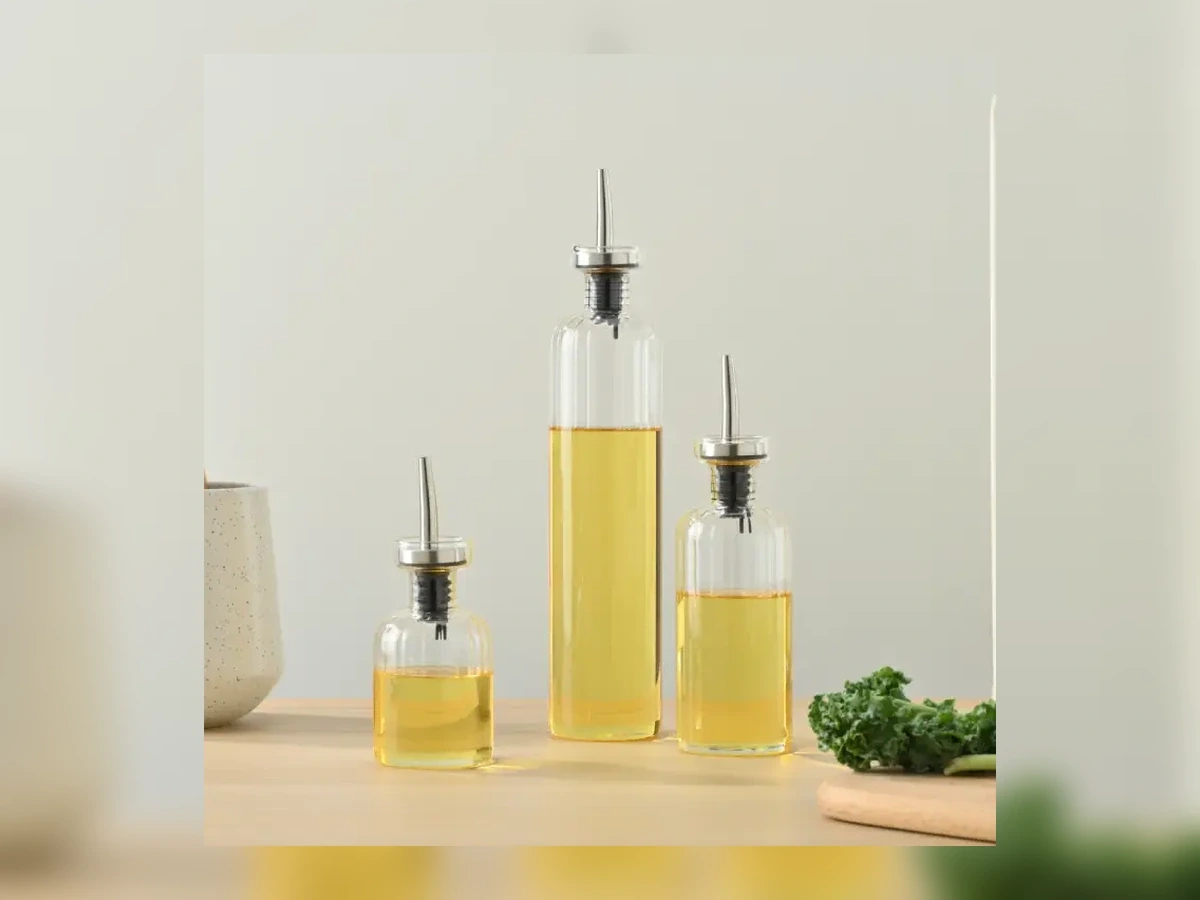
Testez l'échantillon plusieurs fois. Remplissez-le, versez lentement, puis plus rapidement, arrêtez-vous à mi-chemin, essuyez le bord, et répétez l'opération après avoir retiré et remis le bec verseur. Un produit de référence tel que le Flacon distributeur d'huile en verre borosilicate peut aider les acheteurs à comparer la forme du corps, l'ajustement au niveau du cou et la présentation sur le comptoir avant de valider la demande d'échantillon.
Les matériaux du bec modifient le positionnement du produit
Les becs verseurs en acier inoxydable offrent généralement une présentation plus épurée, tandis que les bouchons automatiques ou les composants en plastique peuvent correspondre à un autre segment de prix ou à des habitudes d'utilisation différentes. Il est important de vérifier le bon fonctionnement du couvercle anti-poussière, l'étanchéité du joint, la facilité de nettoyage et la possibilité de ranger le bec verseur sans qu'il ne se plie ou ne frotte contre le verre.
Quels détails concernant la capacité et la stabilité ont une incidence sur l'utilisation quotidienne ?
Le choix de la contenance doit se faire en fonction de l'utilisation réelle. Une petite bouteille conviendra aux coffrets cadeaux et aux cuisines compactes, tandis qu'une plus grande bouteille réduit la fréquence de remplissage mais est plus lourde et nécessite une base plus large.
Le poids du produit rempli doit être vérifié.
Ne pas évaluer la stabilité à partir d'un échantillon vide. Remplir le flacon d'eau ou d'un substitut d'huile, le poser sur une surface plane, verser plusieurs fois le contenu et vérifier sa prise en main. Consigner la capacité, le poids à l'état rempli, la hauteur, le diamètre de la base, le diamètre du goulot et la quantité par carton dans la fiche produit.
La planification du recouvrement peut augmenter la valeur des commandes
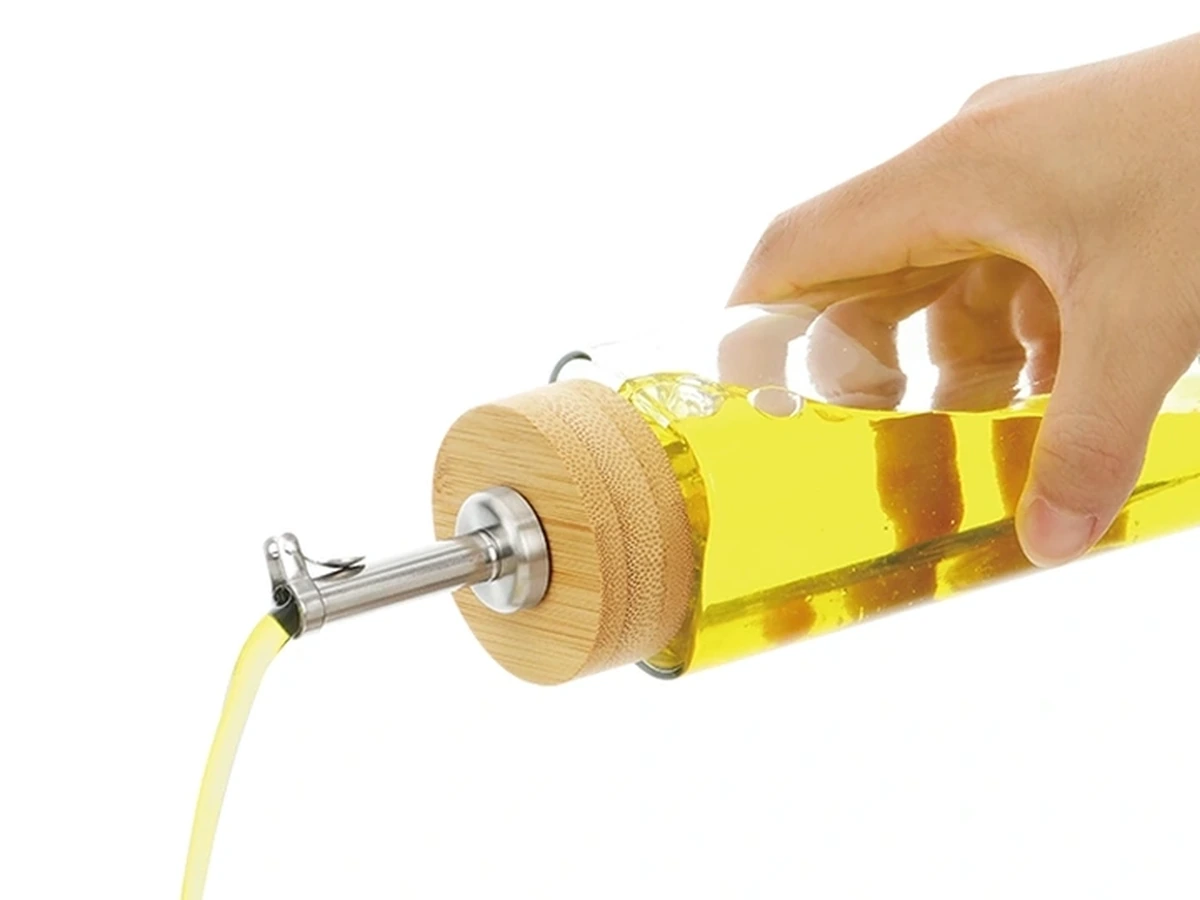
Certains acheteurs vendent des bouteilles d'huile dans le cadre d'une gamme coordonnée d'articles de cuisine. Dans ce cas, la couleur du couvercle, la transparence du verre et le style d'emballage doivent s'harmoniser avec les pots à épices, les bocaux de conservation, les moulins et les plateaux. Bouteille d'huile de couvercle en bambou avec distributeur Il est utile de revoir ce point lorsque la gamme a besoin d'un aspect plus chaud et naturel.
Comment les acheteurs peuvent-ils se fixer des attentes réalistes en matière de fuites ?
Les flacons distributeurs d'huile sont généralement conçus pour un dosage précis, et non pour être agités, transportés après remplissage ou stockés longtemps à l'envers. Les acheteurs doivent préciser leurs réclamations en fonction de la structure exacte du bouchon et des conditions normales d'utilisation.
Les réclamations doivent correspondre exactement à la structure du plafond
La description correcte du produit dépend de l'ajustement du bec verseur, de la conception du joint, du mouvement du bouchon, de la tolérance du goulot et du comportement de l'utilisateur. Si le canal de vente exige une garantie d'étanchéité plus solide, demandez la méthode de test correspondante avant l'approbation du visuel ou du texte de l'annonce.
Les conceptions alternatives nécessitent des tests séparés.
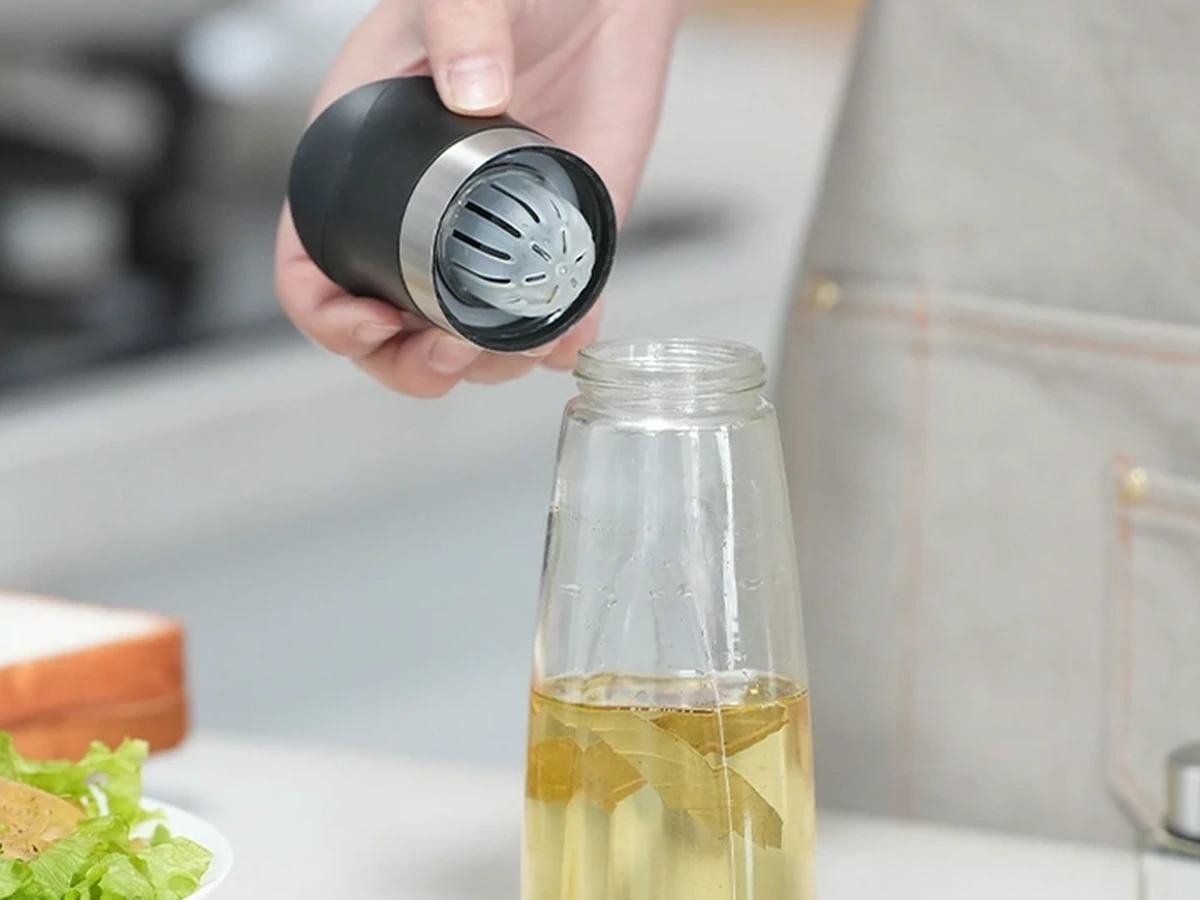
Un bec verseur classique, un bouchon automatique et un système de pulvérisation et de versement répondent à différents besoins. Les acheteurs comparant un distributeur d'huile automatique Il convient de tester la réactivité du bouchon, la prise en main, le nettoyage et la protection de l'emballage comme un type de produit distinct, au lieu de supposer qu'il se comporte comme une simple bouteille à bec verseur.
Quelles questions relatives à l'emballage et à l'image de marque doivent être résolues ?
L'emballage fait partie intégrante du produit, surtout pour le verre. Même une bouteille de qualité peut poser problème si la notice, le carton, le code-barres ou le fichier de marque privée sont validés trop tard. Les acheteurs doivent considérer l'emballage comme un système facilitant la manutention : la position de la bouteille, l'emplacement du bec verseur, l'ouverture du carton par le client et le contrôle du carton à la réception.
Les détails de la marque privée influent sur le calendrier
L’impression du logo, l’emplacement des étiquettes, le visuel de la boîte en couleur, les étiquettes volantes, les notices d’utilisation, les étiquettes code-barres et les photos du produit doivent être planifiés avant l’approbation de l’échantillon final. Toute modification du bec verseur ou du plateau intérieur après validation du visuel peut impacter la taille et la mise en page de la boîte.
Les notes de la demande de prix doivent inclure les besoins logistiques.
Une demande de devis utile doit inclure le canal de distribution cible, la capacité, le type de bec verseur, la préférence pour un couvercle ou un bouchon, la méthode de marquage, la quantité par carton, le format d'emballage, le calendrier d'échantillonnage et toute exigence relative aux tests de chute. Les acheteurs qui ont besoin de programmes coordonnés pour les bouteilles d'huile et la verrerie de cuisine peuvent contacter SinoGlass avec le marché cible et les règles d'emballage avant la finalisation du devis.
Il est également judicieux de se renseigner sur l'emballage prévu par le fournisseur pour les becs verseurs de rechange, les bouchons supplémentaires et les accessoires d'échantillon. Ces petits éléments sont souvent transportés séparément dans la boîte, et un mauvais rangement peut rayer le verre ou induire le client final en erreur. Une courte photo de l'emballage de l'échantillon approuvé permet à l'acheteur de se référer facilement pour le contrôle à réception.
Les vérifications finales de la plage de valeurs doivent être effectuées avant l'établissement du devis.
Avant d'établir un devis, comparez le flacon approuvé avec les autres articles de comptoir de la même gamme. Si le canal nécessite à la fois une fonction de pulvérisation et de versement, un Pulvérisateur et distributeur d'huile en verre 2 en 1 peut être examinée comme une option distincte plutôt que d'être ajoutée tardivement au cahier des charges du même produit.
Conclusion
Un programme de fabrication de flacons distributeurs d'huile en verre performants commence par la manipulation d'échantillons concrets. Avant de passer une commande importante, les acheteurs doivent vérifier le bon fonctionnement du bec verseur, la stabilité du remplissage, la conformité aux indications d'utilisation, les éléments de marque et l'emballage pour l'exportation. En intégrant ces détails dans la demande de devis, le fournisseur peut établir un prix plus précis et l'acheteur peut concevoir une gamme d'articles de cuisine plus facile à reproduire.
Questions fréquentes
Q1 : Quelle est la partie la plus importante d'un flacon distributeur d'huile en verre ?
A1 : Le bec verseur est généralement la partie fonctionnelle la plus importante car il influe sur le contrôle du versement, le comportement des gouttes, le nettoyage et la satisfaction quotidienne du client.
Q2 : Les bouteilles d'huile en verre sont-elles totalement étanches ?
A2 : Cela dépend du bouchon et du joint. De nombreux flacons distributeurs d’huile sont conçus pour être posés verticalement sur un comptoir ; il est donc conseillé aux acheteurs de vérifier les limites d’utilisation réalistes auprès du fournisseur.
Q3 : Quelle capacité les acheteurs d’ustensiles de cuisine doivent-ils choisir ?
A3 : La capacité optimale dépend du canal de vente, de la taille du comptoir, des habitudes de remplissage, du format d'emballage, du poids rempli et du plan d'expédition.