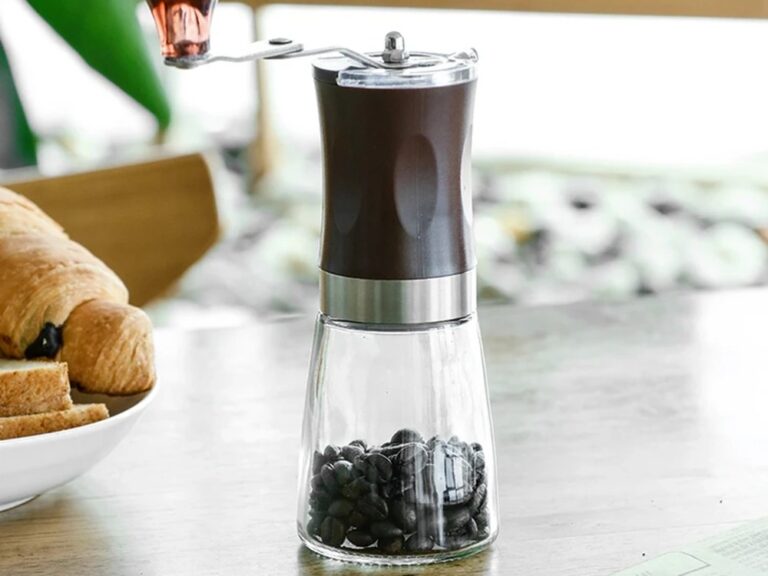

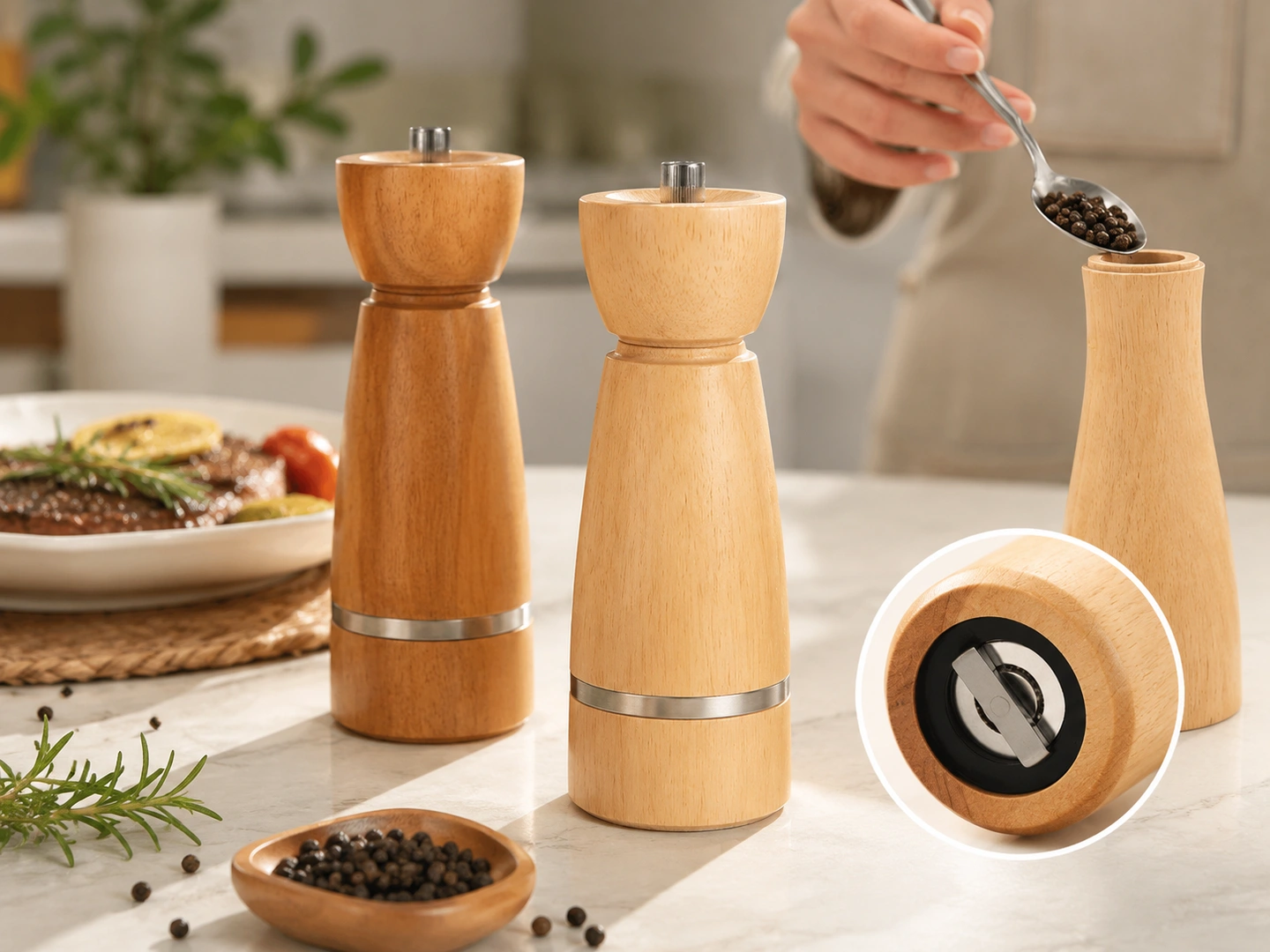
يمكن لمطحنة الفلفل الخشبية أن تلفت الأنظار من النظرة الأولى. فملمس الخشب الدافئ، وشكلها البسيط، وترتيبها الأنيق على الطاولة، كلها عوامل تُضفي على المنتج مظهرًا أكثر فخامة من المطاحن البلاستيكية العادية. ولكن بالنسبة لمشتري العلامات التجارية الخاصة، فإن المظهر ليس سوى البداية.
يُحكم على المنتج بعد أن يقوم شخص ما بتدويره، وإعادة تعبئته، ووضعه على الطاولة، واستخدامه مرة أخرى في اليوم التالي. إذا كانت آلية الطحن ضعيفة، أو كان ضبطها غير واضح، أو كانت فتحة إعادة التعبئة صعبة الاستخدام، أو كان تشطيب الخشب يختلف اختلافًا كبيرًا بين المجموعات، فإن المظهر الجميل لا يحمي العلامة التجارية من الشكاوى.
لهذا السبب، ينبغي أن يبدأ اختيار مطاحن الفلفل الخشبية بالأجزاء التي يلمسها المستخدمون ويختبرونها فعلياً. فالمطحنة ذات المظهر الجيد تحتاج أيضاً إلى طحن ثابت، وتحديد واضح للملح والفلفل، وخيارات أحجام عملية، وتغليف واقٍ، وملفات إنتاج قابلة للتكرار.
لماذا يفشل المظهر وحده في الترويج لخط إنتاج مطاحن الفلفل الخشبية؟
غالباً ما تُشترى مطاحن الفلفل الخشبية لجمالها الذي يُضفي لمسةً أنيقةً على المائدة، وهذا أمرٌ منطقي. فمطحنة الفلفل الخشبية تُضفي على طقم أدوات المائدة مظهراً أكثر دفئاً وجاذبيةً كهدية. ولكن عندما يُباع المنتج تحت علامة تجارية خاصة، فإن مسؤولية المشتري تتجاوز مجرد المظهر الخارجي.
منطق التوريد الآمن بسيط: دع المظهر الخارجي يجذب المتسوق، ولكن دع آلية العمل وتجربة الاستخدام تحافظان عليه. وهنا تحديداً تحتاج العديد من المصانع ذات المظهر الجيد إلى تدقيق أكبر.
يحتاج طلاء الخشب إلى اتساق في كل دفعة.
لن يكون مظهر حبيبات الخشب متطابقًا تمامًا من قطعة لأخرى، وهذا جزء من جاذبيتها. تكمن المشكلة عندما تبدو المجموعة غير متناسقة، أو عندما يختلف اللون المعروض في صور المنتج اختلافًا كبيرًا عن اللون الذي سيتم استلامه.
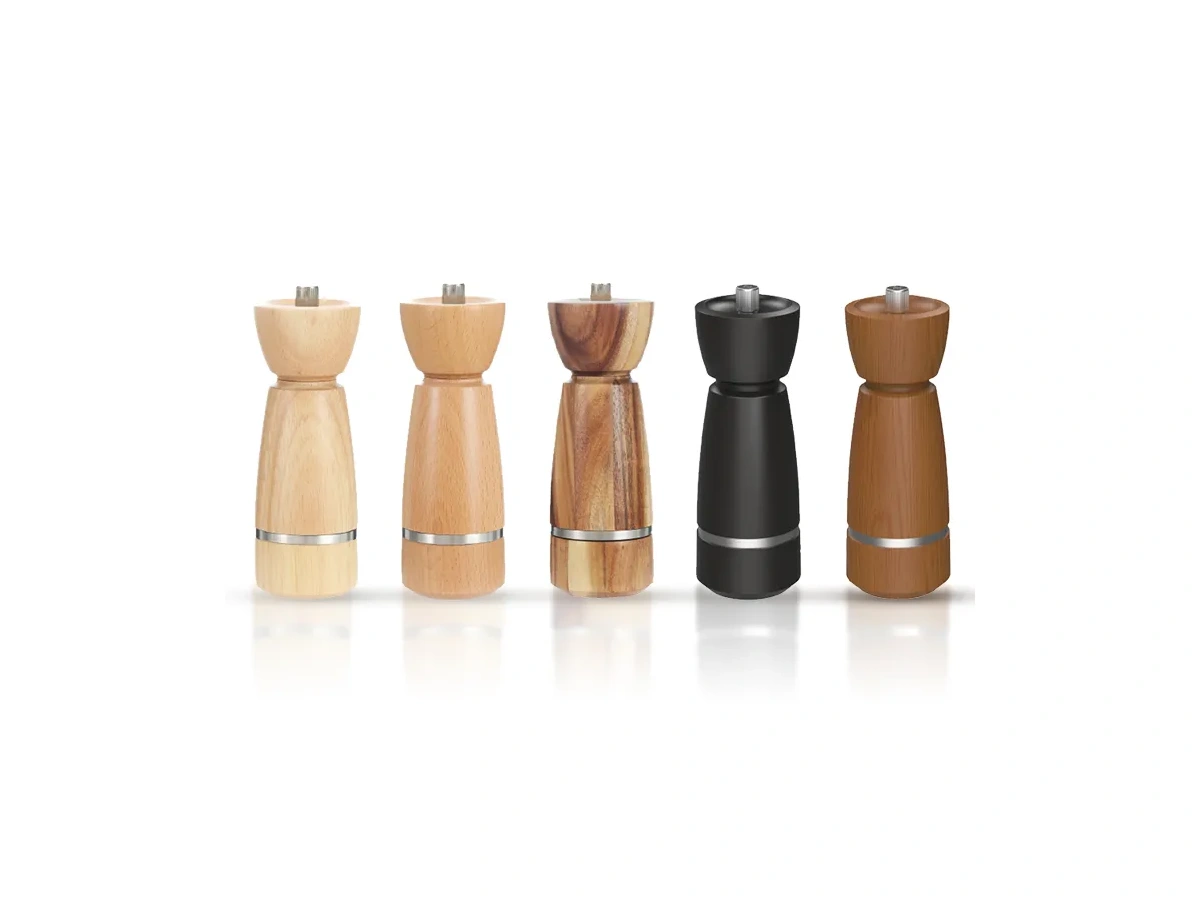
سينوغلاس مطاحن الملح والفلفل الخشبية تتضمن هذه المجموعة خيارات متنوعة من أشكال الخشب وتصاميم أطقم تناسب مختلف فئات أسعار أدوات المائدة. بالنسبة لتجار التجزئة، لا تكمن القيمة في المواد فحسب، بل في التنوع المُتحكم به، ووضوح عملية الموافقة على العينات، والتغليف الذي يُضفي على الطقم مظهرًا مُخططًا له بدقة بدلاً من كونه مُختارًا عشوائيًا.
يؤثر ملمس اليد على التقييم الأول
تُمسك مطحنة الفلفل الخشبية، وتُدار، ثم تُملأ. يُعدّ الشكل والحجم مهمين لأن الزبائن يُقيّمون المنتج من خلال ملمسه. فإذا كانت زلقة جدًا، أو ضخمة جدًا، أو يصعب تدويرها، فإن طقم أدوات المائدة يبدأ في فقدان جودته.
ينبغي على المشتري اختبار الاستخدام الفعلي. اطلب من شخص ما تدوير المطحنة عدة مرات، وتغيير درجة الطحن، وإعادة تعبئتها. لا يستغرق هذا سوى بضع دقائق، ولكنه يُظهر ما إذا كان المنتج جاهزًا للاستخدام اليومي.
المظهر الفاخر يحتاج إلى تغليف عملي
قد تتعرض المطاحن الخشبية للخدش أثناء الشحن إذا كان الكرتون أو الغلاف الداخلي ضعيفًا. يجب حماية الحلقة المصنوعة من الفولاذ المقاوم للصدأ والمقبض والسطح الخشبي أثناء عمليات التخزين والتوصيل إلى متاجر البيع بالتجزئة.
يحتاج تغليف الهدايا أيضاً إلى توضيحٍ دقيق. هل هي مطحنة فلفل خشبية منفردة، أم طقم مطحنة ملح وفلفل، أم جزء من مجموعة أدوات مائدة متكاملة؟ يجب أن يوضح الصندوق ذلك دون الإسهاب في الكلام.
ما هي تفاصيل المطحنة التي تحدد ما إذا كان العملاء سيستمرون في استخدامها؟
مطحنة الفلفل أداة عملية. قد يُعجب المستخدم بمظهرها، لكنه لن يستمر في استخدامها إلا إذا كانت تطحن الفلفل بسلاسة وتضبط بسهولة. وهنا تحديدًا تفقد العديد من المطاحن الرخيصة جاذبيتها.
لا ينبغي إخفاء آلية الطحن عند اتخاذ قرار الشراء
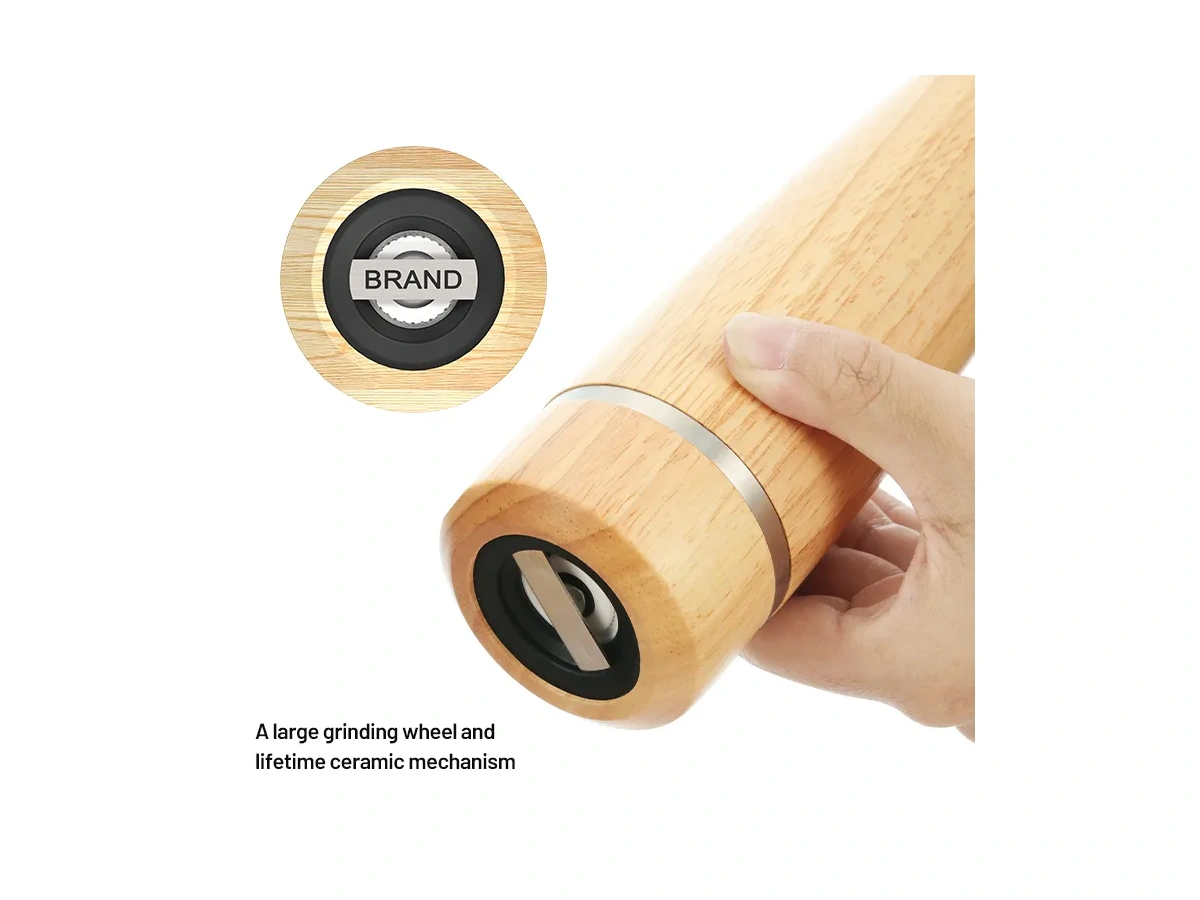
ينبغي أن يكون مورد مطاحن الفلفل قادراً على شرح آلية الطحن، وليس مجرد عرض ألوان الخشب. فئة مناشر الخشب يركز هذا المنتج على المطاحن الخشبية المزودة بآليات طحن وإمكانية تعديل درجة النعومة. وهذا يمنح المشترين ميزة إضافية تتجاوز مجرد هيكل خشبي أنيق.
تؤثر آلية عمل المنتج على شعور المشتري به بعد الشراء، كما تؤثر على ما يمكن لفريق المبيعات شرحه. فإذا لم يتمكن المشتري من وصف نقطة التآكل بوضوح، فقد يلجأ إلى مقارنة الأسعار.
يجب أن يكون شرح عملية التعديل من الدقة إلى الخشونة سهلاً
لا يرغب جميع المستهلكين في نفس درجة الطحن. فبعضهم يحتاج إلى توابل ناعمة للشوربات والصلصات، بينما يفضل آخرون الفلفل الخشن لشرائح اللحم والسلطات أو لتقديمه على المائدة. تتيح مطحنة الفلفل الجيدة للمستخدم ضبط درجة الطحن بسهولة ودون أي حيرة.
إن مطاحن خشبية للفلفل والملح استخدم آلية سيراميكية، وأضف علامات مميزة للملح والفلفل على مقبض من سبائك الزنك. هذه التفاصيل مفيدة في طقم مطحنة الملح والفلفل لأنها تساعد المستهلكين على التمييز بين المطحنتين بسرعة.
يجب أن يشرح غلاف المنتج آلية التعديل بلغة بسيطة وواضحة. فالميزة التي لا يفهمها المستخدمون لا تُعتبر ميزة قيّمة. وهذا الأمر بالغ الأهمية، خاصةً بالنسبة لمطاحن الفلفل الخشبية ذات العلامات التجارية الخاصة، حيث يُساهم كل من العلبة وصفحة المنتج في عملية البيع.
قد يصبح تصميم عبوات إعادة التعبئة مشكلة في عملية التقييم
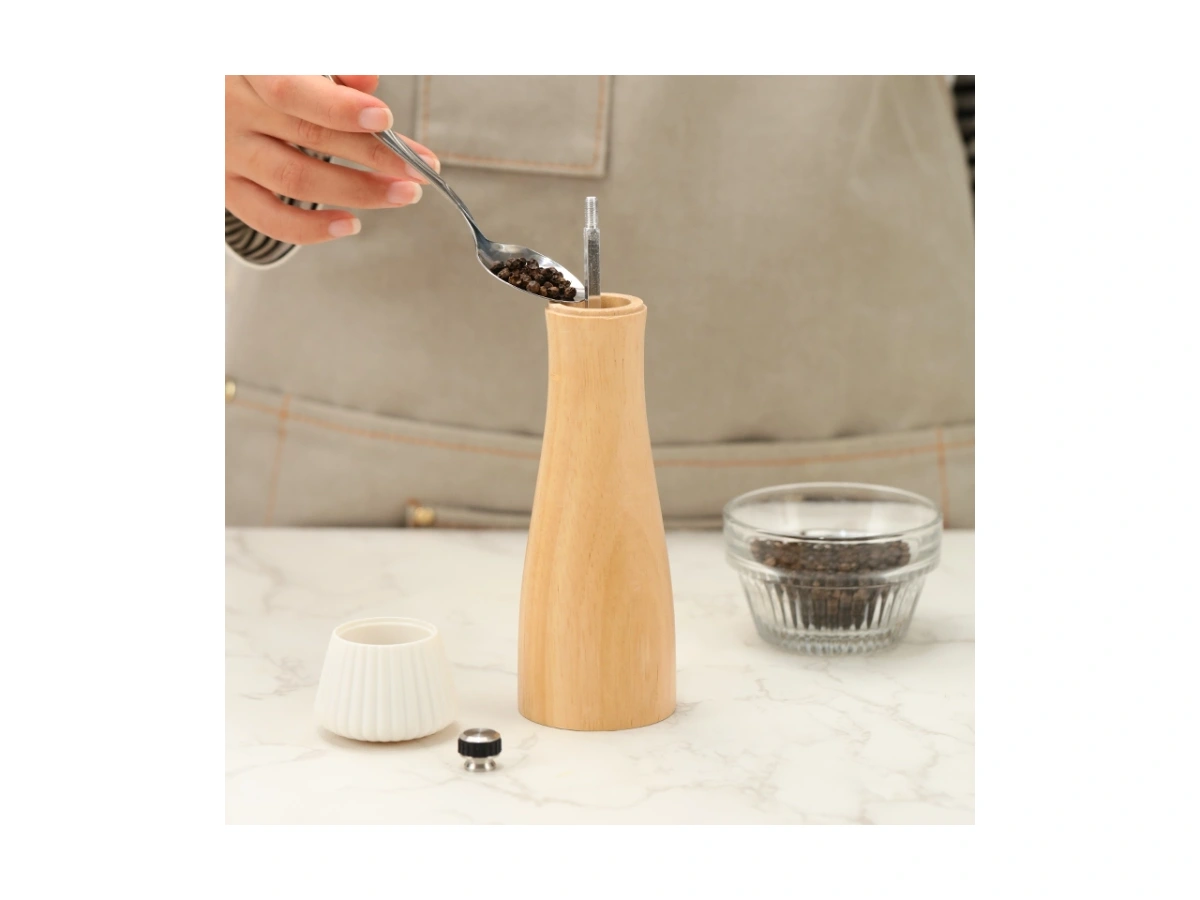
إعادة التعبئة ليست عملية ممتعة، لكنها من الأمور التي يتذكرها المستخدمون. فتحة التعبئة الضيقة، أو المقبض الذي يسهل فقدانه، أو المطحنة التي تسكب حبوب الفلفل أثناء التعبئة، كلها عوامل قد تؤدي إلى تقييمات سلبية.
ينبغي على المشترين تجربة إعادة التعبئة بحبوب الفلفل الأسود والملح. تحقق من سرعة فتح المطحنة، وسهولة تعبئتها، وما إذا كانت آلية عملها تبقى نظيفة. في هذه المرحلة، قد يكون من المفيد الرجوع إلى التعليمات المكتوبة، أو الرسومات التوضيحية على العلبة، أو البطاقات المرفقة.
كيف ينبغي لمشتري العلامات التجارية الخاصة بناء مجموعة طاحونة خشبية؟
يمكن بيع مطحنة الفلفل الخشبية كأداة مطبخ منفردة، لكنها غالبًا ما تكون أكثر فائدة كجزء من طقم أدوات مائدة، أو طقم هدايا، أو مجموعة من إكسسوارات المطبخ. يحتاج المشتري إلى تحديد قناة البيع قبل اختيار الحجم ونوع الخشب والتغليف.
مطاحن فردية مناسبة لخطوط المطابخ الوظيفية
تُعدّ مطحنة الفلفل الخشبية ذات القطعة الواحدة خيارًا مثاليًا لتجار أدوات المطبخ الذين يبحثون عن منتج عملي ذي ملمس دافئ مقارنةً بالفولاذ المقاوم للصدأ أو البلاستيك. في هذه الحالة، تتمثل أهم مزاياها في جودة الطحن، وسهولة إعادة التعبئة، والحجم، ومظهر الخشب.
لضمان فعالية المنتج، ينبغي على المشترين تجنب تعقيد الطلب الأول. قد يكون نوع واحد من الخشب، وحجم واحد، وتغليف واحد نظيف كافياً لاختبار الطلب. هذا يُسهّل تسعير مطحنة الفلفل الخشبية، وإدراجها في قوائم المنتجات، وإعادة طلبها.
يجب تحديد أطقم الملح والفلفل بوضوح.
بالنسبة لأطقم أدوات المائدة، يحتاج العميل إلى معرفة أيّ مطحنة مخصصة للملح وأيّها للفلفل. تساعد التفاصيل الصغيرة مثل علامة الملح/الفلفل، وتصميم المقبض، وكتابة المعلومات على العلبة في منع حدوث أي لبس.
سينوغلاس مطاحن الملح والفلفل الخشبية يمكن أن يدعم هذا المنتج المشترين الذين يرغبون في الحصول على مجموعة كاملة من مطاحن الملح والفلفل. كما أن تصميم المجموعة يمنح فرق المبيعات شرحًا أوضح من مجرد أسطوانتين خشبيتين متشابهتين.
تغليف الهدايا يحتاج إلى أكثر من مجرد صورة جميلة
يجب أن يحمي صندوق الهدايا سطح الخشب، ويحافظ على محاذاة القطع، ويعرض المنتج بوضوح. إذا تحركت المنشار داخل الصندوق، فقد يحتك سطح الخشب بالحشوة أو بجزء آخر، مما قد يُفسد المظهر الفاخر للمنتج قبل حتى أن يستخدمه العميل.
ينبغي على المشترين طلب معلومات عن حجم العلبة، والمواد الداخلية، وعدد الكراتين، وصور المنتج المعبأ. أما بالنسبة لبرامج العلامات التجارية الخاصة، فينبغي التأكد من موضع الشعار وتناسق الألوان بنفس دقة التأكد من المنتج نفسه.
ما الذي يجب على المشترين سؤاله لموردي مطاحن الفلفل قبل طلبات الشراء بالجملة؟
ينبغي على مورد مطاحن الفلفل تقديم الدعم الكامل للطلب، وليس مجرد إرسال عينة من الخشب وعرض سعر. يحتاج المشتري إلى إجابات واضحة بشأن نوع الخشب، والحجم، وآلية التشغيل، ومكونات المجموعة، والتغليف، والحد الأدنى للطلب، وملفات الطلبات المتكررة.
| شيك المشتري | لماذا يهم |
|---|---|
| نوع الخشب والتشطيب | يتحكم في التناسق البصري عبر خط الإنتاج الخاص. |
| الحجم والوزن | يؤثر على استخدام الطاولة، وحجم الكرتون، وموقع البيع بالتجزئة. |
| آلية الطحن | يعزز رضا المستخدم بعد الشراء. |
| تحديد نوع الملح/الفلفل | يساعد العملاء على استخدام المجموعة بشكل صحيح. |
| التغليف والملحقات | يحمي طلاء الخشب ويحسن من عرض الهدايا. |
اختبر باستخدام الملح والفلفل الحقيقيين
لا تختبر المطحنة وهي فارغة فقط. املأها بحبوب الفلفل الأسود الحقيقية والملح عند الحاجة. تحقق من كمية الطحن، وضبطها، وملمسها، وعملية إعادة التعبئة، وما إذا كانت هناك بقايا تتساقط على الطاولة.
يساعد هذا الاختبار المشترين أيضاً على كتابة وصف أفضل للمنتجات. فالاستخدام الفعلي يُضفي على المنتج لغةً أفضل من وصفه في الكتالوج، ويساعده على تجاوز الادعاءات العامة المتعلقة بطاحونة الفلفل.
احفظ ملفات الإنتاج للطلبات المتكررة
تعتمد قيمة العلامة التجارية الخاصة على إمكانية تكرارها. يجب على المورد الاحتفاظ بمراجع معتمدة لتشطيبات الخشب، وملفات الشعار، وتصميمات التغليف، وبيانات الكرتون، وسجلات العينات. إذا حققت الطلبية الأولى مبيعات جيدة، فلا ينبغي البدء من الصفر في الطلبية الثانية.
سينوغلاس خدمة تصنيع المعدات الأصلية/تصميم المعدات الأصلية يمكننا تقديم الدعم للمشترين في تصميم الشعار والتغليف وتأكيد العينات وتنسيق الإنتاج. بالنسبة لبرامج مطاحن الفلفل الخشبية، يساعد ذلك في ربط تفاصيل المنتج بقصة العلامة التجارية لأدوات المائدة.
استنتاج
مطحنة فلفل خشبية ذات مظهر جيد تُعد بداية موفقة، لكنها غير كافية لأطقم أدوات المائدة ذات العلامات التجارية الخاصة. يحتاج المشترون إلى التحقق من جودة تشطيب الخشب، وملمسه، وآلية السيراميك، وإمكانية ضبط درجة الطحن من ناعم إلى خشن، وتصميم عبوات إعادة التعبئة، وتحديد أنواع الملح والفلفل، وحماية التغليف، ومراقبة ملفات المورد.
تُتيح مجموعة مطاحن الخشب من سينوغلاس للمشترين عدة طرق لتصميم مطاحن فردية، ومجموعات مطاحن الملح والفلفل، وبرامج أدوات مائدة جاهزة للإهداء. إذا كان المشتري يسعى لتجاوز مجرد صور المنتجات الجذابة، وتصميم مجموعة قابلة للاستخدام وإعادة الشراء، مع شرح وافٍ، فإن الخطوة التالية هي التأكد من نوع الخشب، والحجم، وآلية التشغيل، والتغليف، ونطاق الطلب مع مورد قادر على دعم الإنتاج المتكرر. يمكن للمشترين أرسل تفاصيل مشروع منشرة الأخشاب إلى شركة سينو جلاس قبل تأكيد الإعداد النهائي للعلامة التجارية الخاصة.
الأسئلة الشائعة
س1: لماذا لا يكفي استخدام تشطيب الخشب عند اختيار مطاحن الفلفل؟
أ1: يحتاج المشترون أيضًا إلى التحقق من آلية الطحن، والتعديل، وتصميم إعادة التعبئة، وملمس المنتج، وحماية التغليف.
س2: هل يمكن لمطاحن الملح والفلفل الخشبية من سينوغلاس دعم مجموعات أدوات المائدة ذات العلامات التجارية الخاصة؟
ج2: نعم. يمكننا مناقشة نوع الخشب والشعار والحجم وتكوين المجموعة والتعبئة والتغليف واحتياجات تصنيع المعدات الأصلية الأخرى.
س3: ما الذي يجب على المشترين اختباره قبل طلب مطحنة الفلفل الخشبية؟
A3: اختبار ضبط الطحن، وشعور الدوران، وفتحة إعادة التعبئة، واستخدام الملح والفلفل، وتناسق التشطيب، والتعبئة في الكرتون.